
Chagos Islands Handover: UK-Mauritius Treaty Sparks International Debate
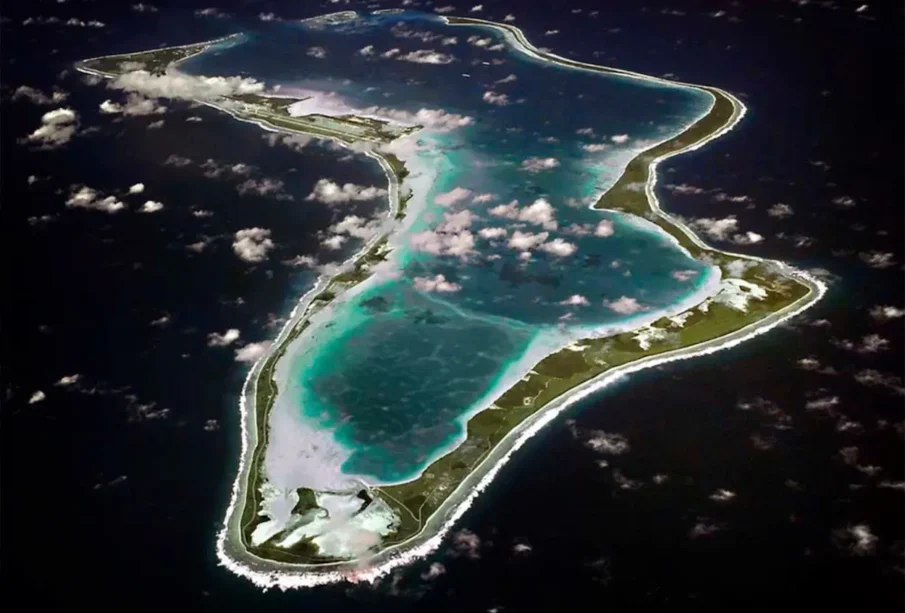
Credit: AP
The United Kingdom’s decision to return the Chagos Islands to Mauritius has triggered debate on both sides of the Atlantic, drawing strong reactions from politicians and the public alike. Former US President Donald Trump criticised the plan as “an act of great stupidity” in a post on Truth Social, linking it to his own interest in Greenland. Meanwhile, UK political figures including Kemi Badenoch and Nigel Farage have voiced support for Trump’s critique, framing it as a challenge to the UK-Mauritius treaty currently progressing through Parliament.
What Are the Chagos Islands?
The Chagos archipelago lies in the central Indian Ocean, approximately 5,800 miles south-east of the UK and 1,250 miles north-east of Mauritius. The islands became British territory in 1814 as part of the Treaty of Paris, which ended Napoleon’s rule. In 1965, the UK separated the islands from Mauritius, creating the British Indian Ocean Territory (BIOT), while Mauritius gained independence three years later.
The largest island, Diego Garcia, hosts a joint UK-US military base, strategically important for regional security. When the islands were separated, the indigenous Chagossian population was forcibly relocated to Mauritius and Seychelles, with a small number later resettled in the UK in 2002. The original agreement envisioned that the islands would return to Mauritius once they were no longer essential to Britain’s defence.
Why Is the UK Returning Them Now?
Mauritius has long claimed sovereignty over the islands, taking the matter to international courts. In 2019, the International Court of Justice (ICJ) issued a non-binding advisory opinion stating that Mauritius’ decolonisation process was never lawfully completed and that the UK was “under an obligation to bring to an end its administration of the archipelago as rapidly as possible.”
The UK government, under Prime Minister Rishi Sunak, announced in 2022 that negotiations with Mauritius would begin to determine the future of the islands. Officials argued that legal clarity was essential to secure Britain’s defence interests and to reduce potential challenges in international courts.
Negotiation and Agreement
After 11 rounds of negotiations before the July 2024 general election, Labour’s incoming government continued discussions, culminating in a joint statement on 3 October 2024. The treaty was formally signed by Prime Minister Keir Starmer and Mauritian Prime Minister Navin Ramgoolam on 22 May 2025. Starmer described the agreement as crucial, noting that continued legal challenges could have left the UK vulnerable to provisional measures orders from international courts within weeks.
The treaty allows Mauritius to assume sovereignty while the UK retains a 99-year lease over Diego Garcia, with the option to extend. Whitehall estimates the average annual cost of the lease at £101 million, with a projected net present value of £3.4 billion. British officials emphasised that the deal ensures the continued operation of the strategic military base.
Political Reactions in Britain and the US
The UK’s Conservative Party, led by Kemi Badenoch, criticised the agreement, calling it a “surrender” and raising concerns over Mauritius’ diplomatic relations with China and Russia. Shadow Defence Secretary James Cartlidge argued that the Conservatives had opposed such a deal while in government, viewing it as a costly arrangement to lease land already owned freehold.
Across the Atlantic, the US government issued a statement confirming that the agreement preserves the long-term, stable operation of the joint UK-US military base. Trump initially expressed hesitation during a February 2025 Oval Office meeting with Starmer but later indicated he was “inclined” to support the deal, describing it as potentially beneficial.
Political Reactions in Britain and the US
The UK’s Conservative Party, led by Kemi Badenoch, criticised the agreement, calling it a “surrender” and raising concerns over Mauritius’ diplomatic relations with China and Russia. Shadow Defence Secretary James Cartlidge argued that the Conservatives had opposed such a deal while in government, viewing it as a costly arrangement to lease land already owned freehold.
Adding to the criticism, a recent tweet from a senior Conservative figure stated:
“Paying to surrender the Chagos Islands is not just an act of stupidity, but of complete self-sabotage. I’ve been clear and unfortunately on this issue President Trump is right. Keir Starmer’s plan to give away the Chagos Islands is a terrible policy that weakens UK security and hands away our sovereign territory. And to top it off, makes us and our NATO allies weaker in face of our enemies. Last night I met Speaker Johnson and we are united in that view. Britain’s and America’s interests align. Keir Starmer has the chance to change course on Chagos. Conservatives call on President Trump to reconsider Greenland too.”
The tweet echoes concerns voiced by some UK Conservatives and highlights the transatlantic interest in the treaty, particularly in light of Trump’s earlier criticism of the handover.
Trump’s Comments and Context
Trump’s recent Truth Social post, criticising the UK-Mauritius treaty as “stupid,” came shortly after Starmer publicly rebuked the former president’s threats of tariffs on European countries opposing his Greenland ambitions. The timing suggests the comments may be tied less to Chagos policy and more to ongoing tensions over Greenland and US-Europe relations.
Strategic and Legal Implications
Analysts emphasise that the treaty provides the UK with legal certainty over Diego Garcia, reducing the risk of rival nations establishing military bases on surrounding islands. It also reflects a broader commitment to international law and post-colonial reconciliation, acknowledging the historical displacement of the Chagossian people.
Mauritius’ sovereignty over the islands marks a historic moment, correcting a decades-long dispute dating back to colonial separation. The treaty underscores the strategic balancing act of maintaining regional defence commitments while respecting international legal rulings.