
Key Points
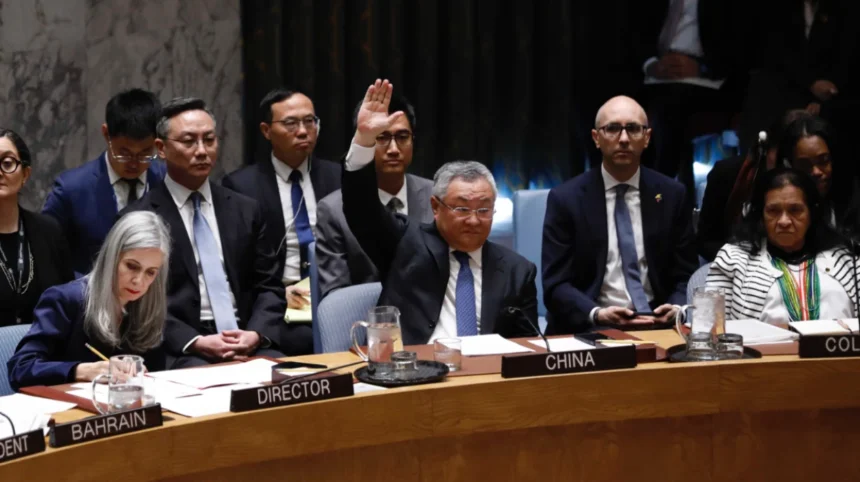
- China and Russia vetoed a United Nations Security Council resolution aimed at protecting commercial shipping in and around the Strait of Hormuz.
- The 15‑member Security Council voted 11 in favour of the draft, with two against and two abstentions, but the resolution failed due to the double veto from permanent members.
- The resolution was tabled by Western and Gulf allies seeking UN authorisation for measures to safeguard vessels and reopen key sea lanes affected by the crisis.
- China and Russia argued the text was unbalanced, overly coercive and risked escalating tensions with Iran instead of supporting diplomacy.
- States backing the resolution said it was a “watered‑down” text that stopped short of authorising force, focusing instead on protection of shipping and freedom of navigation.
- Iran welcomed the veto, calling the draft biased and saying it would have legitimised pressure on Tehran while ignoring its security concerns and sovereignty.
- Several Council members who supported the resolution warned that its failure sends a negative signal to shipowners, insurers and crews operating through the region.
- The vote came amid heightened tensions around the Strait of Hormuz, a key global oil and gas chokepoint already affected by the wider conflict and security incidents.
- Two Council members abstained, expressing concern both about Iran’s actions and about the risk that the resolution could widen the confrontation.
- Diplomats signalled that efforts would continue to find a compromise formula at the UN, but no clear timeline was set for a revised text.
Why did China and Russia veto the UN resolution on Hormuz shipping?
China and Russia used their veto power at the United Nations Security Council to block a draft resolution that sought to create a UN‑backed framework to protect commercial shipping in and around the Strait of Hormuz. The draft, introduced by backers including Western and Gulf states, was presented as a response to recent attacks, threats and interference affecting vessels in the strategic waterway. Supporters argued that a clear Security Council mandate was needed to reassure shipowners, crews and insurers, and to uphold freedom of navigation in line with international law.
As reported by multiple diplomatic correspondents, Chinese and Russian representatives said they opposed the text because they believed it was unbalanced and could have increased tensions rather than reduced them. Their delegations argued that any Council response must avoid language that could be interpreted as authorising coercive measures against Iran or paving the way for the use of force. Both capitals also raised concerns that the resolution did not, in their view, sufficiently reflect Iran’s stated security concerns or the broader regional context.
According to UN reporters, China and Russia maintained that the draft put disproportionate responsibility on Tehran while not giving enough weight to calls for restraint from all parties operating in and around the Strait of Hormuz. Their veto meant that, despite majority support, the resolution did not pass. The decision underlined how divisions among permanent members can prevent Council action even when a clear majority of the 15‑member body favours a particular approach.
How did the Security Council vote and what did the draft resolution propose?
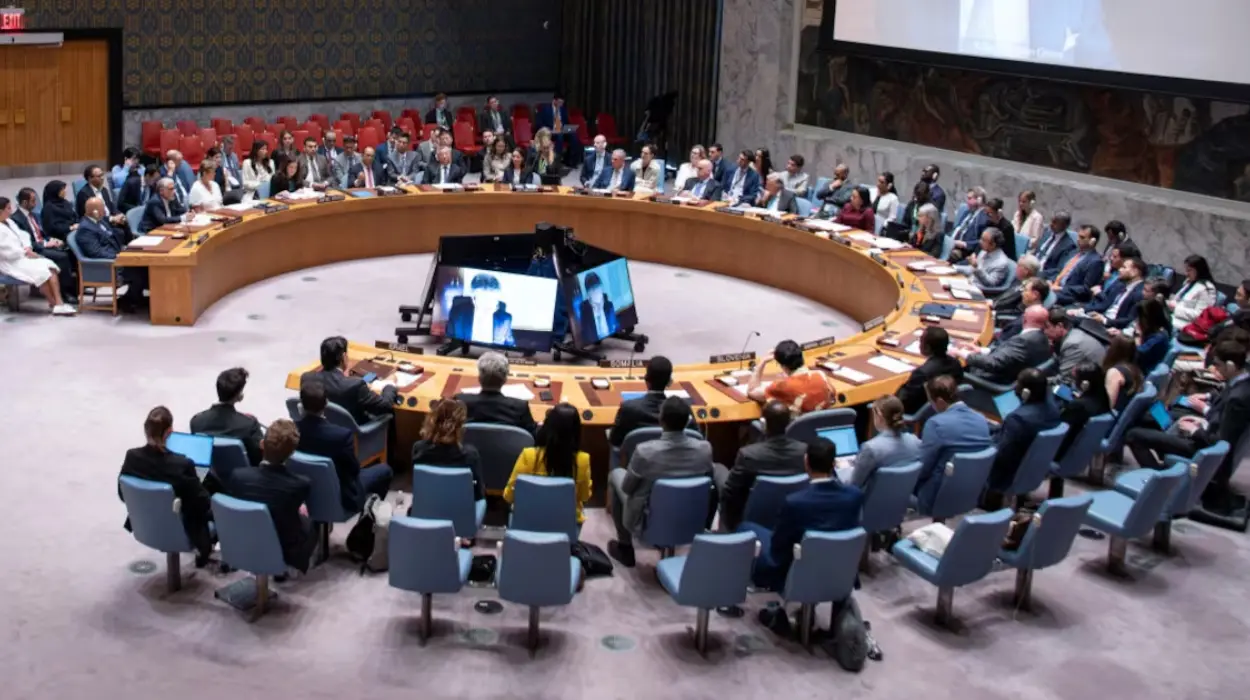
The 15‑member Security Council voted 11 in favour of the resolution, with two votes against and two abstentions. The two “no” votes were cast by China and Russia, both permanent members with veto power, while the abstentions came from members who expressed reservations about elements of the text but chose not to oppose it outright. Under the UN Charter, any veto by a permanent member is sufficient to block a draft resolution, regardless of the number of votes in favour.
Diplomatic sources said the draft text called for the protection of commercial shipping and reaffirmed the principle of freedom of navigation and overflight in accordance with international law. It urged all states to refrain from the threat or use of force against vessels engaged in legitimate commercial activity in the region. The resolution was described by supporters as “watered‑down” compared with earlier ideas, with language on potential enforcement reportedly softened during negotiations in an effort to secure broader backing.
As reported by UN‑based journalists, the text stopped short of explicitly authorising military force but was intended to give political backing to efforts to safeguard shipping lanes, including through existing or planned multinational naval and air patrols. It also called for de‑escalation, dialogue and respect for the sovereignty and territorial integrity of coastal states, including Iran and neighbouring Gulf countries. However, China and Russia argued that, in practice, the text would have legitimised pressure on Tehran and could be used to justify unilateral measures they did not support.
What were the arguments of countries supporting the resolution?
Delegations that voted in favour of the draft resolution said it was a necessary and measured response to a deteriorating security situation in and around the Strait of Hormuz. As relayed by Council correspondents, these states stressed that recent attacks, near‑misses and threats against commercial vessels had heightened risks for global energy supplies and trade flows. They argued that the Council had a responsibility to act when international shipping routes vital to the world economy were at risk.
Supporters emphasised that the final text had been significantly watered down in the course of negotiations, with contentious provisions either removed or softened. They said the focus was firmly on protecting civilian shipping, reaffirming international law and encouraging diplomatic solutions. Some representatives underlined that the draft contained calls for restraint by all parties, not only Iran, and explicitly supported mediation and regional dialogue.
More Read

Several Council members that backed the resolution described it as a signal of reassurance to shipowners, seafarers and insurers that the international community was engaged on the issue. They also argued that failure to adopt the text could embolden those responsible for attacks or interference with shipping, by suggesting that the Council was divided and unable to respond. In their statements, these delegations avoided direct criticism of China and Russia but voiced regret that the veto had prevented the resolution’s adoption.
How did China, Russia and Iran react to the outcome?
In their explanations of vote, China and Russia set out detailed reasons for their veto. Chinese representatives said the draft was, in their view, one‑sided and risked undermining diplomatic efforts already under way in the region. They called for a more balanced text that would place stronger emphasis on negotiations, mutual restraint and respect for the sovereignty of coastal states. Russian diplomats similarly argued that the draft could have been interpreted as backing coercive measures targeting Iran and warned that such an approach would be counter‑productive.
As reported by UN and regional media, Iran welcomed the veto by China and Russia. Iranian officials described the draft resolution as biased and claimed it would have institutionalised pressure on Tehran while failing to address what it called the causes of insecurity in the region. They argued that any international approach must take into account Iran’s security concerns and its position as a coastal state with responsibilities and rights in the Strait of Hormuz and adjacent waters.
Officials from Iran reiterated that they reject unilateral or externally imposed security frameworks, insisting that regional arrangements led by states in the area are the appropriate way to manage shipping and maritime safety. They characterised the failed draft as an attempt to internationalise the crisis in a way that could sideline local actors. At the same time, Iranian authorities said they remained open to dialogue under conditions they consider fair and respectful of their sovereignty.
What did abstaining members and other Council states say?
The two Council members that abstained on the vote voiced a mix of concerns and reservations. In their public explanations, they noted serious worries about attacks and threats to commercial shipping and acknowledged the importance of freedom of navigation and maritime security. However, they also expressed unease about aspects of the draft resolution, including whether it might be interpreted as endorsing actions that could expand the ongoing confrontation.
These abstaining states indicated that they would have preferred more extensive consultations and further revisions to the text. They underlined the need to avoid any steps that might be seen as taking sides in broader regional disputes. Some also highlighted the importance of ensuring that any Council product has wide support among member states and contributes to lowering tensions rather than inadvertently raising them.

Other Council members, including those who voted in favour, took the floor to stress that their support for the resolution did not mean they favoured escalation. They emphasised that they backed the draft because of its focus on civilian shipping and international law, while reiterating their support for diplomatic solutions. Several speakers encouraged all parties, including Iran and states operating naval forces in the region, to avoid miscalculation and maintain professional conduct at sea.
How does this veto affect efforts to secure shipping in the Strait of Hormuz?
The veto means that there is currently no new Security Council mandate specifically addressing the latest round of threats to shipping in the Strait of Hormuz. Existing international law, including the UN Convention on the Law of the Sea for those states that are party to it, continues to govern freedom of navigation and related issues. However, the absence of a fresh Council resolution limits the scope for coordinated UN‑endorsed measures.
Diplomatic observers say that countries concerned about shipping security are likely to rely on existing arrangements, including national and multinational naval deployments, to deter attacks and respond to incidents. Without a Council resolution, any such actions will not carry the additional political weight of an explicit UN mandate, even if they are conducted with reference to general principles of self‑defence or protection of nationals and commercial interests.
The veto also underscores wider divisions among major powers over how to handle tensions linked to the Strait of Hormuz and Iran’s role in the region. These differences make it more difficult to craft a unified UN response, even when many Council members agree on the importance of safeguarding shipping. As a result, much of the burden of managing immediate risks is likely to fall on regional diplomacy and operational measures at sea rather than on new UN‑based frameworks.
Background of the Hormuz shipping protection initiative
The latest draft resolution formed part of broader international efforts to respond to a series of incidents affecting commercial vessels in and around the Strait of Hormuz. The narrow waterway is a key route for global oil and gas exports and has frequently been at the centre of tensions involving Iran, Gulf states and external powers. In previous episodes, attacks on tankers, seizures of vessels and drone strikes on energy infrastructure in the region have prompted concerns about global energy supplies and maritime safety.
Attempts to secure a Security Council resolution followed reports of new threats and interference involving shipping linked to the wider conflict and heightened confrontation in the region. Backers of the draft sought to build on earlier discussions at the UN about protecting critical sea lanes, drawing parallels with past initiatives in other areas where piracy or attacks on shipping had become a serious concern. Negotiations involved multiple rounds of revisions as sponsors tried to address the concerns of different Council members, including by removing or softening language that might be seen as authorising force.
Despite these changes, significant differences remained over how to characterise events in the Strait of Hormuz and how directly to refer to Iran’s role. China and Russia consistently pushed for more emphasis on diplomatic engagement and regional solutions, while many Western and Gulf states pressed for a clearer statement from the Council on freedom of navigation and the need to protect commercial shipping. The eventual failure of the resolution reflects the difficulty of reconciling these positions in the current political climate.
Prediction: How could this development affect global shipping companies and energy‑importing states?
For global shipping companies, the failure of the UN resolution is likely to maintain or increase uncertainty about the security framework in the Strait of Hormuz and adjacent waters. Without a new Security Council mandate, shipowners and operators may place greater emphasis on private risk assessments, insurance conditions and guidance from flag states. This could translate into higher insurance premiums, route adjustments, or additional security measures on board vessels transiting the area.
Energy‑importing states, particularly those heavily reliant on oil and gas flows that pass through the Strait of Hormuz, may face continued exposure to disruption risks. Even in the absence of major incidents, perceived threats to shipping can influence market sentiment and contribute to price volatility. Governments and companies in importing countries may therefore review contingency plans, diversify supply routes where possible, and consider the implications for strategic reserves and procurement strategies.
In diplomatic terms, the double veto may push some states to focus more on regional and bilateral arrangements to manage risks to shipping, rather than expecting rapid breakthroughs at the Security Council. For both shipping companies and energy‑importing states, this could mean operating in an environment shaped by overlapping national and coalition initiatives rather than a single UN‑endorsed framework. The degree to which these efforts can reduce tensions and provide predictability will be a key factor in how the situation affects costs, routing decisions and long‑term planning.