
Key Points
- Global and Asian shares traded mostly higher in cautious dealings as investors weighed rising oil prices against hopes of a last‑minute deal to reopen the Strait of Hormuz ahead of a U.S. deadline set by President Donald Trump.
- Oil prices climbed further, with U.S. benchmark crude and Brent both well above pre‑war levels, reflecting fears over prolonged disruption to Middle East energy supplies.
- President Donald Trump has set an 8 p.m. ET Tuesday deadline for Iran to reopen the Strait of Hormuz to unrestricted oil shipping or face U.S. strikes on critical civilian infrastructure, including power plants and bridges.
- Trump has repeatedly threatened to “destroy every bridge in Iran” and suggested the country could be “taken out in one night” if Tehran does not comply with U.S. demands on the strategic waterway.
- Iran has rejected the latest ceasefire proposal relayed by mediators, insisting it will not negotiate under threats or ultimatums and dismissing a U.S. 15‑point plan as excessive.
- Tehran says any framework must recognise its “legitimate demands” and rejects characterisation that this amounts to compromise, framing its position as defence of national interests.
- Trump has called Iran’s recent proposals a “very significant step” but “not sufficient” and has refused to back a reported 45‑day ceasefire idea before the deadline.
- U.S. allies are pressing for a last‑minute agreement, while Iran and Oman have been working on a protocol to manage traffic through the Strait of Hormuz.finance.
- The stand‑off comes amid a weeks‑long conflict that has already fuelled a global energy shock and pushed oil and natural gas prices sharply higher.
- Treasury yields have remained elevated versus pre‑war levels as bond markets track both inflation risks from higher energy prices and the prospect of a sharper risk‑off move if the conflict escalates.
- Market strategists describe the current phase as a prolonged “escalation cycle” since Trump’s initial ultimatum in late March, with little sign of a comprehensive political settlement.
- U.S. stock futures and major indices have been broadly steady to slightly higher as investors await clarity on whether hostilities will pause or intensify this week.
- A downed U.S. F‑15E crew member was rescued earlier in the week, and Trump has used the incident to underline warnings of possible strikes on Iranian infrastructure.
- Both Washington and Tehran have received draft frameworks intended to end hostilities and reopen the Strait, but neither side has yet signed off on the latest proposals.
- The uncertainty is keeping energy markets and global investors on edge, with any failure to reach a deal by the deadline expected to trigger sharp swings in oil and risk assets.
King County Inside, April 7, 2026 – Asian markets mostly higher as Trump’s Iran deadline drives oil surge and global jitters.
Asian equities traded mostly higher in cautious dealings on Tuesday, as reported by The Hindu Business Line’s markets team, with investors balancing modest risk appetite against the rising price of oil ahead of U.S. President Donald Trump’s deadline for Iran to allow unrestricted shipping through the Strait of Hormuz. According to that report, gains across key Asian benchmarks came even as traders confronted the possibility that failure to reach a deal could trigger U.S. strikes on Iranian power plants and bridges, potentially deepening the region’s energy shock. The Wall Street Journal similarly noted that global stocks edged higher as investors waited to see whether efforts to secure at least a temporary halt in the fighting would succeed before the deadline.
As detailed by The Hindu Business Line, U.S. benchmark crude rose by 2.41 dollars to 114.82 dollars a barrel, while Brent crude climbed by 1.46 dollars to 111.23 dollars, both well above pre‑war levels of around 70 dollars a barrel. The Wall Street Journal reported that oil prices added roughly 0.7 per cent by the close of the previous session, reflecting continuing concern about the duration and scope of disruptions to Middle East supplies. Analysts quoted in these reports highlighted that the combination of higher energy costs and geopolitical uncertainty is feeding into broader market volatility, even as headline equity indices maintain a cautiously positive trend.
In its daily note, the Mizuho Bank research team in Singapore described Trump’s recent moves as part of “an escalation cycle that has now been prolonged multiple times since his initial ultimatum in late March,” stressing that the range of views among parties means a “comprehensive resolution” remains distant. According to that note, countries have increasingly pursued bilateral arrangements to manage near‑term energy needs while broader negotiations continue, adding another layer of complexity for global investors. U.S. futures, CNBC reported, remained relatively steady on Monday evening as investors processed Trump’s latest comments on Iran and the approaching deadline.
What is President Trump threatening if Iran does not reopen the oil route by the deadline?
CNBC’s “Daily Open” briefing reported that on Monday Trump told reporters Iran’s latest ceasefire proposal was “not sufficient” as his Tuesday deadline approached, reiterating warnings that the U.S. could strike Iranian civilian infrastructure, including bridges and power plants, if the Strait of Hormuz is not reopened by 8 p.m. ET. In the same coverage, CNBC noted that Trump nevertheless described Tehran as an “active, willing participant” in talks, suggesting he believed Iranian negotiators were still engaged despite his public threats. Bloomberg Television, in an interview with Yale School of Management lecturer Gautam Mukunda, highlighted Trump’s warning that the U.S. military could destroy “every bridge in Iran by 12 o’clock tomorrow night” if Tehran fails to comply with his ultimatum to reopen the waterway.

The Wall Street Journal reported that Trump, during a press briefing, said of Iran that the “entire country [could] be taken in one” and suggested that “that night might be tomorrow night,” language that underscored the severity of his threatened response. Canadian broadcaster CBC noted that in what it described as a fiery speech, Trump said Iran could be “taken out in one night” if it did not meet his deadline to reopen the Strait of Hormuz, and used his Truth Social account to label the upcoming Tuesday as “Power Plant Day and Bridge Day, all rolled into one, in Iran.” According to CBC, he linked those threats to warnings of strikes on “key infrastructures,” including energy facilities and transport links, should the strait remain blocked or negotiations fail.
CNBC reported that Trump has also rejected an idea for a 45‑day ceasefire that would start before his deadline, indicating he is not prepared to pause his ultimatum to allow more time for talks. In its coverage, Bloomberg relayed Trump’s comment that Iranian leaders “don’t want to cry, as the expression goes, ‘uncle,’ but they will, and if they don’t, they’ll have no bridges,” framing his stance as a pressure campaign aimed at forcing Tehran to change course. These statements, carried across multiple outlets, have contributed to market expectations that any failure to reach agreement by Tuesday evening could be followed by rapid military escalation.
How has Iran responded to the ceasefire proposals and U.S. ultimatum?
The Economic Times, in a video report on the five‑week conflict, said Washington and Tehran were presented with a framework aimed at ending hostilities and reopening the Strait of Hormuz but that Iran rejected the proposal, insisting negotiations cannot proceed under ultimatums or threats. According to that report, Iranian foreign ministry spokesperson Esmaeil Baghaei argued that articulating Iran’s “legitimate demands” should not be interpreted as compromise but rather as confidence in defending the country’s position. He also stated that a previous U.S. 15‑point plan had been dismissed as excessive by Tehran.

Bloomberg’s coverage similarly reported that Iran rejected a proposed ceasefire just days before Trump’s deadline, describing the move as another setback to efforts to end the month‑long war that has already triggered a global energy crisis. Bloomberg noted that the rejection was conveyed through Pakistani mediators, who have been involved in efforts to bridge differences between Washington and Tehran. CBS Chicago added that Iran has also turned down the latest ceasefire proposal presented by negotiators, while a White House official said Trump himself has not signed off on it either, leaving the framework in limbo.
In these accounts, Iranian officials have maintained that they will not bow to pressure under the threat of imminent strikes, while advocating a permanent cessation of hostilities rather than temporary arrangements. The Hindu Business Line noted that on Monday Iran rejected the latest ceasefire proposal and instead called for a permanent ceasefire, a stance that has complicated efforts to secure an immediate de‑escalation before Tuesday’s deadline. This position reflects Tehran’s broader insistence that any deal must address its security concerns and sovereignty over the key waterway.
What diplomatic efforts are under way around the Strait of Hormuz crisis?
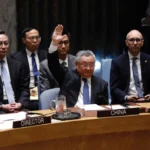
According to Bloomberg’s interview with Gautam Mukunda, U.S. allies are urging a last‑minute agreement between Washington and Tehran, pushing for a compromise that would reopen the Strait of Hormuz and avert the threatened strikes on Iranian infrastructure. In its report, Bloomberg said Trump has described some of Iran’s recent proposals as a “very significant step” but still “not enough” to end the fighting, signalling that gaps remain between the parties’ positions. CNBC also reported that both capitals have received draft frameworks but that Trump has not endorsed one idea for a 45‑day ceasefire, limiting options for mediators seeking more time.
The Hindu Business Line reported that Iranian and Omani officials have been working on a framework to manage the strait, through which a large share of global oil shipments pass in peacetime. Yahoo Finance UK, covering moves in the FTSE 100 and Wall Street, said markets steadied on reports that Iran was drafting a protocol with Oman to manage traffic in the key waterway, a development seen by traders as a potential pathway to easing supply fears. However, The Hindu Business Line cited Mizuho Bank’s view that, given the diverse interests involved, a comprehensive, multilateral settlement is unlikely in the near term, even if limited operational arrangements are reached.
CBS Chicago reported that a White House official confirmed President Trump has not signed off on the latest proposal either, reinforcing the sense that both sides are holding out for better terms even as the deadline approaches. The Economic Times footage highlighted that the framework presented to Washington and Tehran is designed to end hostilities and reopen the strait, but Iran’s rejection underlines continued resistance to what it sees as one‑sided demands. Together, these accounts portray an intensive but fragile diplomatic push racing against the clock set by Trump’s ultimatum.
How are energy markets and bonds responding to the Iran–U.S. stand‑off?

As reported by The Hindu Business Line, U.S. benchmark crude climbed to 114.82 dollars per barrel and Brent crude to 111.23 dollars, with both contracts fluctuating as traders reacted to each new signal from negotiations and from Trump’s public statements. The Wall Street Journal said oil prices posted gains of around 0.7 per cent into the previous close, adding to already elevated levels as investors speculated on whether the Middle East war would pause or intensify this week. Bloomberg, in its segment on Iran and Trump’s threats, framed the situation as part of a wider global energy crisis triggered by the month‑long conflict and the threat to one of the world’s key chokepoints for oil exports.
The Hindu Business Line reported that Treasury yields were broadly stable but remained higher than before the conflict, with the 10‑year U.S. Treasury at 4.33 per cent versus a pre‑war level of 3.97 per cent. That level reflects, according to the report, a market that is balancing higher inflation risks from energy with the potential for a flight to safety if the conflict escalates beyond current expectations. The Wall Street Journal likewise observed that bond markets were tracking developments closely as traders assessed the likelihood of a ceasefire versus further disruption.wsj+1
Yahoo Finance UK said the FTSE 100 closed in positive territory and Wall Street steadied on hopes of progress in talks over a protocol between Iran and Oman to manage Strait of Hormuz traffic, suggesting that even incremental diplomatic signals can influence asset prices. CNBC reported that U.S. equity futures held largely steady into the evening as investors awaited concrete news from Washington and Tehran, with the possibility of sharp moves in either direction depending on whether the deadline passes peacefully or with military action. Across these outlets, analysts emphasised that energy markets and bond yields are tightly linked to the evolving security situation in and around the strait.
What military and security incidents are shaping the current tensions?
CBC reported that early Sunday Trump announced the rescue of the crew member from a U.S. F‑15E fighter jet that had been downed by Iran on Friday, using the episode to underscore his warnings of potential strikes on Iranian infrastructure if no agreement is reached. The Canadian broadcaster said Trump combined the rescue announcement with renewed threats, asserting that Tuesday would be “Power Plant Day and Bridge Day” in Iran absent a satisfactory deal. This sequence has reinforced the perception that military incidents are feeding directly into political rhetoric and market sentiment.
Bloomberg’s coverage of the conflict described it as a month‑long war that has already produced significant damage and contributed to a global energy crisis. In that segment, Gautam Mukunda noted that Iran’s rejection of the proposed ceasefire came less than two days before Trump’s ultimatum was due to expire, further narrowing the window for de‑escalation. The Economic Times and CBS Chicago both highlighted that, alongside official negotiations, media messaging and public warnings from U.S. and Iranian officials have become central components of the stand‑off.
Background of the Strait of Hormuz confrontation
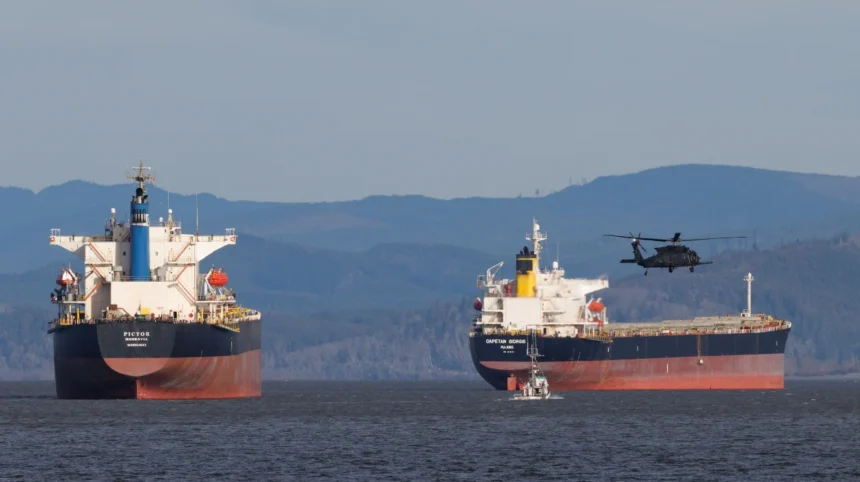
The Strait of Hormuz is one of the world’s most critical maritime chokepoints, carrying a substantial share of global seaborne oil trade, and has repeatedly been at the centre of tensions between Iran, the U.S. and regional powers. Control over shipping through the narrow passage gives Iran leverage in its broader disputes with Washington and its allies, particularly when sanctions or military confrontations escalate. Previous episodes, including tanker attacks and seizures, have periodically jolted energy markets and led to calls for international patrols and alternative routes.
According to The Hindu Business Line, the current crisis follows an initial ultimatum issued by Trump in late March, with subsequent extensions as negotiations failed to yield a definitive agreement. Mizuho Bank’s research team characterised developments since then as a series of escalatory steps, tempered occasionally by diplomatic outreach, but without a clear path to a comprehensive settlement. Bloomberg and CNBC reports indicate that several mediators, including Pakistan and Oman, have attempted to broker frameworks that would both reopen the strait and address security concerns, bucnbc+2youtube+1
The month‑long war referenced by Bloomberg has unfolded against a backdrop of longstanding disputes over Iran’s regional role, nuclear activities and relations with the U.S. and its partners. Energy shocks stemming from the conflict have revived debates among consuming nations about supply diversification and strategic reserves, as highlighted by the moves in oil prices described by The Hindu Business Line and The Wall Street Journal. This broader context shapes how markets interpret each new statement from Washington and Tehran in the run‑up to the current deadline.
Prediction: How could this development affect global investors and energy‑importing economies?
If the deadline passes without an agreement and Trump follows through on threats to strike Iranian infrastructure, analysts quoted across outlets suggest energy prices could rise further, increasing costs for energy‑importing economies and adding to inflation pressures faced by central banks. Higher oil prices of the kind already observed could weigh on corporate margins and consumer spending, affecting global investors through weaker earnings and potentially more volatile equity markets. A significant escalation might also prompt a shift into perceived safe‑haven assets, such as government bonds and some currencies, affecting portfolio allocations worldwide.
Conversely, if last‑minute diplomacy succeeds through, for example, the kind of Oman‑linked protocol mentioned by Yahoo Finance UK or the frameworks described by The Economic Times and CNBC markets could see some easing of risk premia built into oil and related assets. In that scenario, energy‑importing economies might experience less severe price pressures than currently feared, and global investors could respond with renewed appetite for risk assets, at least in the short term. However, as Mizuho Bank’s assessment implies, the underlying political disputes may remain unresolved, meaning bouts of volatility around the Strait of Hormuz are likely to continue influencing global portfolios and the outlook for energy‑dependent economies.