
Key Points
- A 77-year-old man was subjected to a violent, unprovoked assault in downtown Seattle on the night of April 19, 2026.
- The attack occurred near the intersection of Third Avenue and Pine Street shortly before 10 p.m. as the victim was walking home from a bus stop.
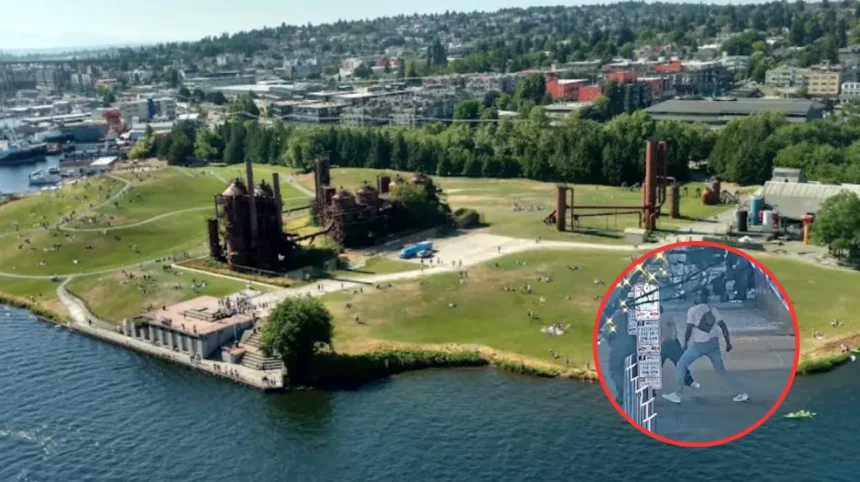
- Surveillance footage from the city’s Real Time Crime Center captured the entire incident, showing one suspect striking the man in the face while another pushed him to the ground.
- Following the assault, the attackers appeared to laugh as they walked away, leaving the victim bleeding and alone on the sidewalk while pedestrians passed by without intervening.
- Seattle police have confirmed that one suspect has been arrested, while efforts to locate the second individual continue.
- The incident has intensified an ongoing political and social debate regarding the efficacy and ethical implications of Seattle’s surveillance camera network.
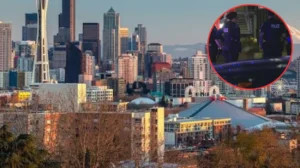
Seattle (King County Insider) May 5, 2026 – A 77-year-old man remains hospitalized following a brutal and unprovoked assault in downtown Seattle that was captured in its entirety by the city’s high-tech surveillance network. The attack, which took place on the night of April 19, 2026, near the corner of Third Avenue and Pine Street, has sparked renewed scrutiny over the city’s public safety measures and the role of widespread video monitoring.
As reported by KIRO 7, Detective Eric Munoz of the Seattle Police Department stated, “This was an unprovoked attack,” further noting that “There was no lead-up to this. There was very minimal interaction.” According to police accounts detailed by KIRO 7, the victim had just exited a bus and was walking southbound when he encountered two men. The surveillance footage shows the victim attempting to step around the individuals when one suspect, described as having a noticeable limp, lunged and struck him in the face, while a second, taller suspect shoved him from behind, sending the man to the ground.
The severity of the incident is highlighted by the attackers’ behavior after the victim was incapacitated. As captured on video and reported by FOX 13 Seattle, the first suspect landed on top of the victim, continuing to punch him while he lay on the sidewalk. The second suspect subsequently pulled his accomplice away and appeared to simulate a kick to the victim’s head before both men departed the scene, allegedly laughing as they crossed the street toward a nearby McDonald’s. During this time, the victim was left bleeding on the sidewalk, and while multiple pedestrians were in the vicinity, reports indicate that no one stopped to assist him until a security guard contacted emergency services two minutes after the assault began.
The victim was transported to Harborview Medical Center with significant injuries, including a broken arm, a broken knee, and a deep laceration above his right eye that required stitches. He has remained under medical care for more than two weeks following the incident.
How is the Real Time Crime Center utilized in Seattle?
The incident was recorded by the Seattle Police Department’s Real Time Crime Center, a surveillance network launched in 2025 that utilizes over 60 cameras placed in designated crime hot spots, including the Third Avenue corridor. SPD Captain James Britt has previously described the technology’s utility, noting that it allows the department to provide real-time information to responding officers. According to KOMO News, the system is operated by civilian staff who monitor live feeds to assist in active investigations.

Police Chief Shon Barnes has maintained a strong stance on the value of these tools for public safety. As reported by KOMO News, Chief Barnes emphasized a proactive approach to policing, stating, “Not just responding to crime after it happens, but we want to ensure that we have fewer victims than we’ve had the year prior”. By May 2025, the center had already assisted in investigating approximately 600 incidents, according to SPD officials.
What is the background of this development?
The deployment of the Real Time Crime Center and the associated camera expansion were approved by the Seattle City Council following legislation introduced to address concerns regarding public safety in high-traffic areas like Third Avenue and the Chinatown International District. The project, supported by Mayor Bruce Harrell’s administration, was designed to move beyond passive recording to an active, real-time monitoring system. However, the program faced significant debate during its inception. Critics, including participants at recent community rallies, have voiced concerns regarding the potential for privacy infringement and the misuse of surveillance data. Proponents, including SPD leadership, argue that the technology is essential for modern policing and accountability, noting that the system has been instrumental in numerous investigations, including car thefts and homicides.
How will this development affect public safety discussions?
The tragic nature of this specific assault is expected to sharpen the ongoing divide between advocates for enhanced public safety technology and civil liberty proponents. For the general public in Seattle, this incident highlights a growing tension: while the surveillance system is proving its capability to track suspects and generate evidence for police, it has not served as a preventative measure for violent, spontaneous crime. The community will likely face increased pressure to determine whether the existing camera network is an adequate deterrent or if further policy adjustments are required to protect residents. If the debate continues to prioritize the balance between privacy and safety, citizens may see changes in how surveillance data is managed, or conversely, demands for a more visible police presence to complement the high-tech monitoring in high-risk areas.