

Key Points
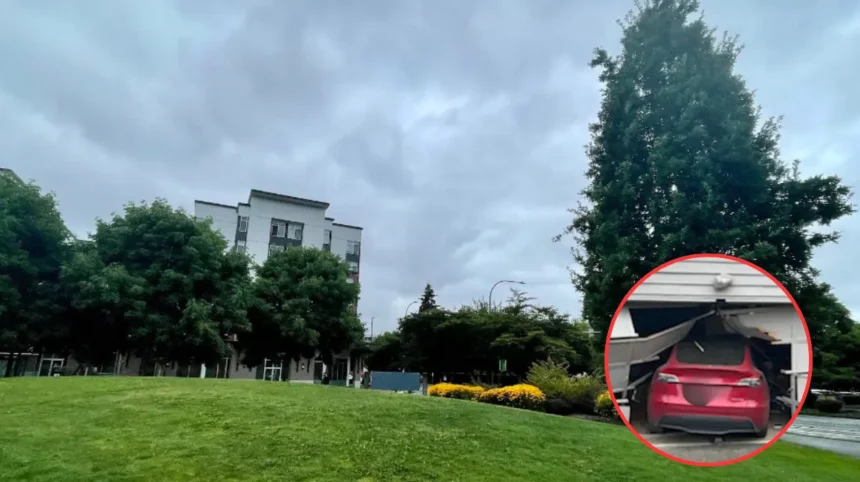
- A Tesla vehicle crashed through a residential garage in Redmond, Washington on Monday morning around 11 a.m.
- The crash occurred in the 6300 block of 151st Avenue Northeast, Redmond Police Department reported
- The driver told police the vehicle’s Autopilot system malfunctioned before the crash
- No injuries were reported despite significant damage to the garage structure
- Police found no indications that driver impairment was a factor in the incident
- The Redmond Police Department confirmed the driver appeared not impaired when the incident occurred
- The investigation into the crash remains ongoing as authorities determine what caused the collision
- Federal regulators have spent years examining how Tesla’s driver-assistance features perform in real-world driving
- Tesla has emphasized to owners that Autopilot can steer, brake, and maintain pace but is not fully autonomous
- Autopilot has been connected to several crashes over the past decade, prompting repeated federal investigations
- The NHTSA concluded an investigation linking Autopilot to 14 deaths across 13 fatal crashes
- California’s DMV has given Tesla 60 days to change how it promotes Autopilot and Full Self-Driving or face a sales ban
Redmond (King County Insider) June 9, 2026 – A Tesla vehicle crashed through a residential garage in Redmond, Washington on Monday morning, causing significant structural damage, and the driver told police the car’s Autopilot system malfunctioned prior to the collision, according to KOMO News. No one was hurt in the crash. Police are still investigating what happened.
As reported by the Redmond Police Department, officers responded around 11 a.m. to a report of a car that had crashed into a residential garage in the 6300 block of 151st Avenue Northeast. When officers arrived, they found the Tesla had already gone through the structure, leaving the home with serious damage.
The driver claimed the car’s Autopilot system had failed and caused the collision, according to police. Investigators found no signs that the driver was impaired. They haven’t said whether anything supports the Autopilot explanation.
How Did the Scene Look After the Crash?
Officers responded to a report of a car that had collided with a home’s garage. When they got there, the Tesla had already gone through the garage. The house was already significantly damaged as well. The driver seemed eager to discuss the Tesla’s Autopilot feature, telling officers the system had malfunctioned just before the crash.
Police confirmed that there had been nothing to suggest the driver was impaired when the incident occurred. They haven’t yet assigned blame or confirmed what role, if any, the car’s software played either. The investigation is still open, in fact, as they look into whether the Autopilot feature actually caused the crash.
Why Is Tesla’s Autopilot Still Under Federal Scrutiny?
Autopilot is a feature meant to assist drivers and isn’t a fully self-driving system. It doesn’t mean the car is fully autonomous. In fact, Tesla has stressed to owners that the technology can steer, brake, and keep pace with traffic, but it’s not perfect. Drivers still need to pay attention and keep their hands on the wheel. The company’s own guidance puts the driver in charge, even when Autopilot is switched on. So there shouldn’t be a situation where Autopilot is totally in control at all times.
Over the past decade, Autopilot has been connected to several crashes. There have also been repeated federal investigations into how it handles real-world driving. The Redmond case is far smaller than many of those, since no one was hurt. And while Tesla’s driving assistance features are quite advanced, it’s also not the only company to offer these features.
As reported by the NHTSA, the agency concluded a lengthy investigation into Tesla’s Autopilot system and found 13 fatal crashes due to misuse and software that doesn’t prioritize driver attentiveness. The NHTSA scrutinized nearly 1,000 crashes, of which 489 had insufficient data for assessment.
In some instances, the other party was at fault, or the Tesla drivers were not using the Autopilot system. The most concerning crashes involved the frontal plane of a Tesla colliding with a vehicle or obstacle, accounting for 211 incidents and 14 fatalities, as well as 49 serious injuries.
The NHTSA discovered that drivers had ample time to react in 78 of these incidents but failed to do so. They did not brake or steer to avoid the hazard, despite having at least five seconds to respond.
What Does the Driver Overconfidence Data Show?
As reported by The Intelligent Driver, Tesla drivers have the highest accident rate at 23.54-26.67 incidents per 1,000 drivers, largely due to overconfidence from brand perception. Tesla’s marketing of “Autopilot” and “Full Self-Driving” creates dangerous misconceptions about vehicle autonomy capabilities.
Real-world examples demonstrate treatment of Level 2 systems as full autonomy. Documented cases include drivers sleeping, reading, or engaging in other activities while Autopilot operated, behaviors incompatible with required supervision levels.
The gap between Tesla’s safety marketing and actual driver assistance limitations contributes to 51 reported Autopilot-related fatalities. Documentation shows 736 Autopilot-related crashes since 2019, including 17 confirmed fatalities.
How Has California’s DMV Responded to Tesla’s Self-Driving Claims?
As reported by Forbes, California’s DMV gives Elon Musk’s EV company 60 days to change how it promotes Autopilot and Full Self-Driving features or face a 30-day sales ban. The state says Tesla deceived consumers with its self-driving claims.
Euro NCAP’s Technical Manager of Assisted Driving Systems, Adriano Palao, has criticised Tesla’s autopilot software, going so far as to say the suite is “misleading consumers about the system’s capabilities”. California’s claim adds to growing regulatory pressure on Tesla’s autonomous vehicle marketing.
What Legal Precedents Have Been Set for Tesla Autopilot Crashes?
As reported by Forbes, a Miami jury decided Tesla was partly responsible for a deadly 2019 crash in Florida involving its Autopilot driver assist technology, ordering Tesla to pay more than $240 million. Tesla said it will appeal the verdict.
Federal judge upheld product liability verdict against Tesla, establishing design accountability precedent for autonomous vehicles in a $243 million case. This opens a window for enterprise adoption risk reassessment and AV manufacturer liability recalculation across the industry.
In another case, a jury ordered Tesla to pay more than $200 million to plaintiffs in a deadly 2019 Autopilot crash, opening the door to other costly lawsuits after the jury held that the car company bore significant responsibility in the crash.
“I relied too heavily on the technology,” McGee, the driver, admitted during his testimony. “I thought if the car detected an obstacle ahead, it would alert me and apply the brakes”.
Background of the Redmond Garage Crash Development
The Redmond garage crash represents a continuation of a decade-long pattern of Tesla Autopilot-related incidents that have prompted intense federal scrutiny. According to the National Highway Traffic Safety Administration, the agency concluded a lengthy investigation into Tesla’s Autopilot system after linking it to 14 deaths across 13 fatal crashes. The NHTSA scrutinized nearly 1,000 crashes, with 489 having insufficient data for assessment.
The most concerning pattern involved frontal collisions where Tesla vehicles hit stopped vehicles, motorcycles, or unexpected obstacles—situations that frequently overwhelm system capabilities. Statistical analysis shows drivers had five or more seconds to react in 59 documented crashes but failed to intervene, suggesting overreliance on automated systems and degraded situational awareness.
Tesla’s fatal crash rate reaches 5.6 per billion miles driven compared to the national average of 2.8 per billion miles, a disparity that persists despite Tesla’s claims of superior safety performance. The agency discovered that drivers had ample time to react in 78 incidents but failed to brake or steer, creating what regulators called a “critical safety gap” leading to “foreseeable misuse and avoidable crashes”.
Over the years, federal regulators have examined how Tesla’s driver-assistance features perform in real-world driving, particularly as the company markets the technology with terms like “Autopilot” and “Full Self-Driving” that create misconceptions about actual capabilities. The Redmond case, while smaller than many incidents since no one was hurt, follows the same pattern of drivers claiming Autopilot malfunction when their vehicles collide with stationary objects.
California’s DMV has now given Tesla 60 days to change how it promotes these features or face a 30-day sales ban, arguing the company deceived consumers with self-driving claims. Euro NCAP’s Technical Manager has similarly criticized Tesla’s autopilot as “misleading consumers about the system’s capabilities”. These regulatory actions represent growing pressure on Tesla to clarify the limitations of its Level 2 driver-assistance systems.
Prediction:
Impact on New EV Buyers Considering Tesla Vehicles
This development can significantly affect potential electric vehicle buyers by reducing confidence in Tesla’s driver-assistance technology. As reported by polling data, amid Tesla’s Autopilot probe, nearly half the public thinks autonomous vehicles are less safe than normal cars. The Redmond crash, combined with ongoing federal investigations and recent $240 million jury verdicts against Tesla, reinforces safety concerns among consumers considering EV purchases.
Tesla drivers already experience the highest accident rate at 23.54-26.67 incidents per 1,000 drivers, largely due to overconfidence from brand perception. New buyers researching Tesla’s safety record may see these statistics и ongoing litigation as warning signs. The gap between Tesla’s safety marketing and actual driver assistance limitations contributes to 51 reported Autopilot-related fatalities, a fact that could deter cautious consumers.
California’s threat of a 30-day sales ban if Tesla doesn’t change how it promotes Autopilot and Full Self-Driving could further impact buyer confidence. Consumers may question whether Tesla vehicles are truly as safe as marketed when courts are ordering the company to pay hundreds of millions in Autopilot-related crash verdicts.
Effect on Current Tesla Owners’ Driving Behavior
Current Tesla owners may become more cautious about relying on Autopilot following this incident and the accumulation of legal precedents. The driver in the Redmond crash admitted to police the system malfunctioned, but investigators found no evidence supporting that claim. This mirrors patterns from other crashes where drivers had ample time to react but failed to intervene despite having five or more seconds to respond.
Owners may pay closer attention to Tesla’s guidance that Autopilot requires them to keep hands on the wheel and maintain attention, even when the system is active. The company has stressed that the technology can steer, brake, and keep pace with traffic but is not perfect and doesn’t mean the car is fully autonomous.
However, documented cases show drivers sleeping, reading, or engaging in other activities while Autopilot operated—behaviors incompatible with required supervision levels. Following high-profile verdicts and regulatory pressure, some owners may reduce overreliance on the system. The $243 million product liability verdict upheld by a federal judge establishes design accountability precedent that could make owners more conscious of their responsibility when using Autopilot.
Impact on Electric Vehicle Market Growth
This development can affect the broader EV market by potentially slowing adoption rates as safety concerns grow. Tesla is no longer the untouchable hyper-growth icon it once was, facing slowing demand, intensifying competition, and growing scrutiny in both the United States and Europe. Continued Autopilot incidents and legal liabilities could exacerbate this trend.
The tech industry faces a bruising month as the gap between Elon Musk’s expansive promises and the rigid limitations of autonomous vehicle technology becomes clearer. As 2026 unfolds, Tesla faces a “legal flood” on accident cases with automated driving, which could affect consumer perception of the entire EV category.
However, Tesla’s driving assistance features are quite advanced, and the company is not the only one offering these features. Other EV manufacturers may benefit if consumers seeking electric vehicles but concerned about Tesla’s safety record choose alternative brands with different driver-assistance approaches. The Euro NCAP safest car badge for the Tesla Model 3 shows safety recognition exists alongside Autopilot concerns, but the question remains whether such awards can overcome negative impacts on sales.
Long-Term Regulatory and Industry Changes
This development can affect the automotive industry by accelerating regulatory oversight of autonomous vehicle marketing. California’s DMV action sets a precedent that other states may follow, potentially creating a patchwork of regulations requiring Tesla and other manufacturers to clarify autonomous vehicle capabilities.
The federal judge upholding the $243 million product liability verdict establishes design accountability precedent for autonomous vehicles, opening windows for enterprise adoption risk reassessment and AV manufacturer liability recalculation across the industry. This could lead to more conservative marketing claims from all manufacturers offering driver-assistance features.
As regulatory pressure mounts, Tesla may need to cancel Autopilot features or push FSD subscriptions with different risk profiles, as suggested by recent industry analysis. Such changes would affect how current and future owners use and trust Tesla’s technology.
The pattern of driver inattention, system limitation encounters, and inappropriate reliance on automated features documented in 450+ accidents involving autopilot misuse in 2022 alone suggests the industry must address fundamental issues with how Level 2 systems are marketed and used. Future developments may require manufacturers to implement better driver monitoring systems or more restrictive operational domains for their driver-assistance features.


Перед тем как запускать на реальные деньги, многие сначала тестируют новые слоты в казино 1win в деморежиме: это помогает понять механику, бонусные символы и частоту выпадений без риска.