

Key Points
- King County prosecutors charged 31-year-old Christopher Leahy of Bellevue with first-degree murder in the death of 19-year-old University of Washington student Juniper Blessing.
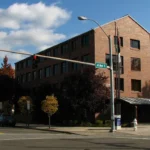
- Blessing was found stabbed in the laundry room of the Nordheim Court apartments near the University of Washington on May 10, 2026.
- Prosecutors said Blessing suffered more than 40 stab wounds.
- Court documents and reporting said surveillance video captured Leahy and Blessing entering the laundry room shortly before the killing, and detectives said Leahy later exited alone.
- Leahy surrendered to police in Bellevue on Wednesday night after surveillance images were released, and he was booked into King County Jail.
- A judge found probable cause for first-degree murder with a deadly weapon and set bail at $10 million.
- Seattle police and prosecutors said they do not currently have evidence that the killing was motivated by Blessing’s gender identity.
- The investigation remains ongoing, and a charging decision had been expected Monday before charges were filed.
Belleuve (King County Insider) May 19, 2026 – King County prosecutors have charged a Bellevue man in the fatal stabbing of University of Washington student Juniper Blessing, a case that has drawn close attention from investigators, campus officials, and the Seattle community.
Who is Christopher Leahy?
As reported by KOMO and NBC News, Christopher Leahy is a 31-year-old Bellevue man who was sought by police after the killing and later surrendered to Bellevue authorities on Wednesday night.
Officials said he was then turned over to Seattle homicide detectives and booked into the King County Jail.
A King County judge later found probable cause to hold him on first-degree murder allegations and set bail at $10 million.
What happened at Nordheim Court?
According to charging documents summarized by multiple outlets, Blessing was found dead in the laundry room of the Nordheim Court apartments near the University of Washington on the night of May 10, 2026.
Prosecutors said Blessing was stabbed more than 40 times, a detail that has shaped the severity of the charge.
Reporting also said campus police responded around 10:10 p.m., and the investigation was later handled by Seattle police homicide detectives.
Police also released a description of a male suspect before Leahy’s surrender, which helped move the case forward publicly.
How did police identify him?
As reported by NBC News and KOMO, police believed surveillance images and video were important to identifying the suspect.
KOMO reported that court documents say surveillance video captured Leahy and Blessing entering the laundry room shortly before the killing, and detectives said Leahy appeared to remain inside for several minutes before leaving alone.
The Stranger also reported that a camera in the laundry room had been unplugged and that footage from a memory card showed the suspect entering the room while Blessing was cleaning lint from a dryer.
After Seattle police released images of the person they were looking for, Leahy surrendered to Bellevue police.
What do charging documents say?
Reporting from KOMO said King County prosecutors allege the killing was first-degree murder with a deadly weapon.
The defense, according to KOMO, argued for a second-degree murder allegation and asked for lower bail, but the judge rejected that request and kept bail at $10 million.
ABC News reported that Leahy made his first court appearance on Thursday and was due back in court on Monday, while NBC News said he had not entered a plea at the time of reporting.
The case remains under active investigation by Seattle police and prosecutors.

Was bias a factor?
Seattle police and the King County Prosecuting Attorney’s Office said there is currently no evidence that the killing was motivated by Blessing’s gender identity.
That point matters because Blessing was a transgender student, and the case has raised concerns in the campus community and beyond.
At the same time, officials have not publicly identified a motive.
For now, investigators have kept the focus on the evidence rather than speculation.
What happened after the arrest?
KOMO reported that memorials were growing on the University of Washington campus and at the apartment complex after Blessing’s death.
The Stranger reported that the university sent campus safety alerts and later provided counseling and support information to students and staff.
ABC News said Leahy was booked after surrendering and had already made an initial appearance in court.
The case continues to move through the King County court system.
Background of the development
Juniper Blessing’s death became a major local story because it happened in student housing near the University of Washington and involved a young student whose death drew rapid police attention.
The reporting shows a sequence that began with a homicide call, followed by a search for a suspect, the release of surveillance images, and then Leahy’s surrender.
The charge of first-degree murder reflects prosecutors’ current view of the case, though the court process will still determine how the evidence is tested.
The case also sits within a broader public conversation about violence, campus safety, and the treatment of transgender victims in reporting and investigations.

Prediction
For University of Washington students and nearby residents, this case is likely to increase attention to dorm and apartment security, surveillance, and emergency alert systems.
For the campus community, the legal proceedings may keep the story in the spotlight as new court filings and hearings add detail.
For transgender students and advocacy groups, the case may remain important because officials have said there is no current evidence of bias motivation, even as the victim’s identity has drawn public concern.
For the broader Seattle audience, the development is likely to be followed as both a criminal case and a campus safety issue.