

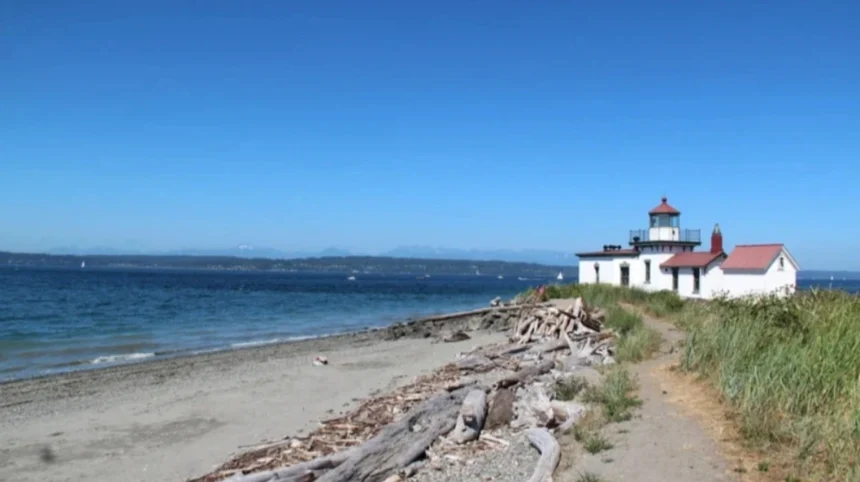
Discovery Park is a 534-acre public park situated on the Magnolia peninsula in Seattle, King County, Washington. As the largest city park in Seattle, it occupies the site of the former U.S. Army post Fort Lawton and overlooks the Puget Sound, offering unobstructed views of both the Cascade Range and the Olympic Mountains. The park contains over 11.8 miles of walking trails, 2.8 miles of protected tidal beaches, sea cliffs, sand dunes, open meadows, and coastal forest habitats. Operated by Seattle Parks and Recreation, Discovery Park serves as a critical urban wildlife refuge for marine mammals, migratory birds, and native flora within the Pacific Northwest coastal ecosystem.
How Big Is Discovery Park and What Ecosystem Diversity Does It Support?
Discovery Park encompasses 534 total acres, making it the expansive crown jewel of the Seattle municipal park system. Located on the westernmost point of Seattle’s Magnolia neighborhood, the reserve sits on a dramatic bluff created by glacial retreat thousands of years ago. The physical footprint spans diverse ecosystems within a single geographical boundary, combining mature coastal coniferous forests, native oak groves, saltwater tidal beaches, high sea bluffs, freshwater wetlands, and open grassy meadows.
Ecosystem Breakdown: The geographical expanse includes 2.8 miles of saltwater shoreline framing the Puget Sound, active coastal sand dunes, and 140-foot vertical sea cliffs that define the western perimeter.
The variation in elevation and coastal exposure fosters distinct ecological zones across the property:
- Coastal Forest Zone: Native Pacific Northwest timber including Douglas-fir (Pseudotsuga menziesii), Western Redcedar (Thuja plicata), Bigleaf Maple (Acer macrophyllum), and Red Alder (Alnus rubra) dominate the inland forest canopy.
- Open Meadow Habitat: Expansive grassy plateaus cover the central grounds, preserving the historical parade fields of old Fort Lawton while offering essential hunting grounds for predatory birds.
- Tidal Shoreline & Dune Zone: The low-lying spit at West Point consists of mixed gravel-and-sand beaches, eelgrass beds, and saltwater marshlands that buffer the Puget Sound tide.
This mosaic of natural environments protects biological diversity within Seattle’s urban limits, acting as a crucial sanctuary for indigenous plant species, insect pollinators, and resident wildlife.
What Are the Best Hiking Loop Routes and Trail Networks to Explore?
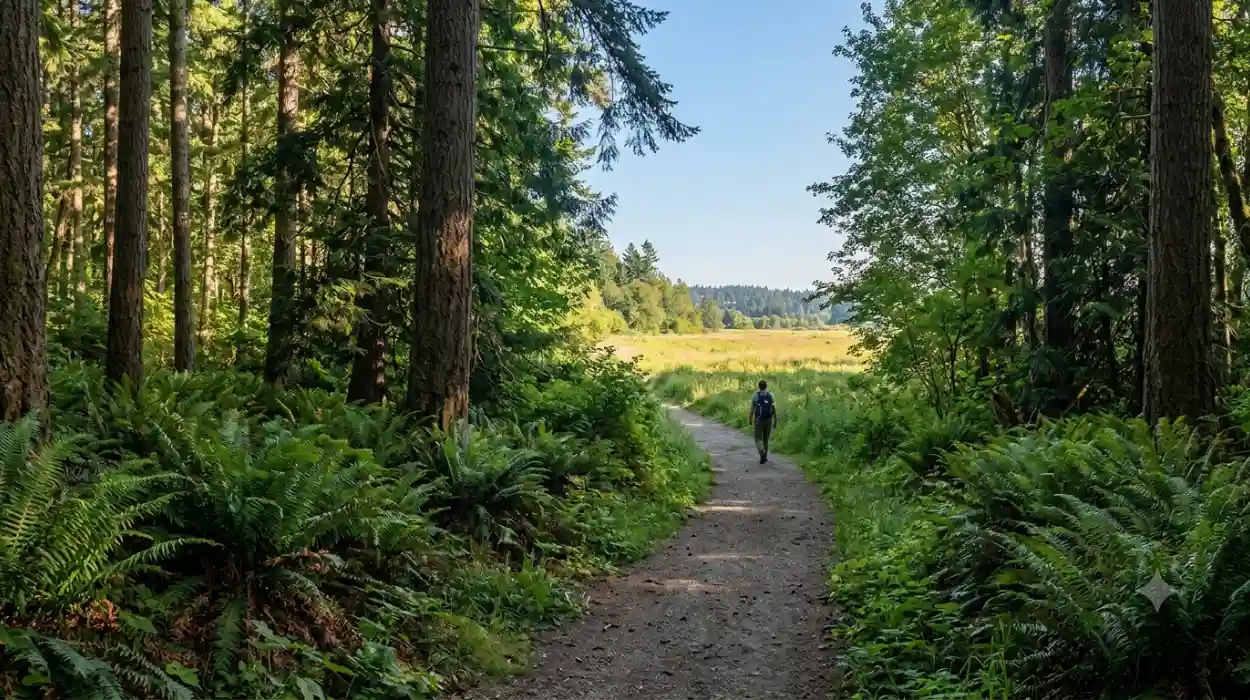
The Discovery Park trail network consists of over 11.8 miles of integrated pedestrian pathways, dirt tracks, and boardwalks managed to direct foot traffic away from sensitive ecological areas. The primary artery of the park is the Discovery Park Loop Trail, a designated National Recreation Trail measuring 2.8 miles in length.
       [ North Parking Lot ]
                │
    ┌───────────┴───────────┐
    ▼                       ▼
[Forest Trails]     [Loop Trail Main]
    │                       │
    ▼                       ▼
[Hidden Valley]────►[Bluff Trail & Overlook]
                            │
                            ▼
                    [West Point Light]
The Discovery Park Loop Trail (2.8 Miles)
The Loop Trail circles the park’s elevated central plateau and offers a comprehensive overview of its primary ecosystems. The trail maintains a moderate grade with an elevation gain of approximately 140 feet. It cuts through deep second-growth forest before emerging onto open meadow bluffs overlooking Shilshole Bay and Bainbridge Island. The circuit is paved in select high-traffic zones and surfaced with crushed gravel along forest stretches, making it suitable for year-round walking and trail running.
The Bluff Trail and Beach Access Routes
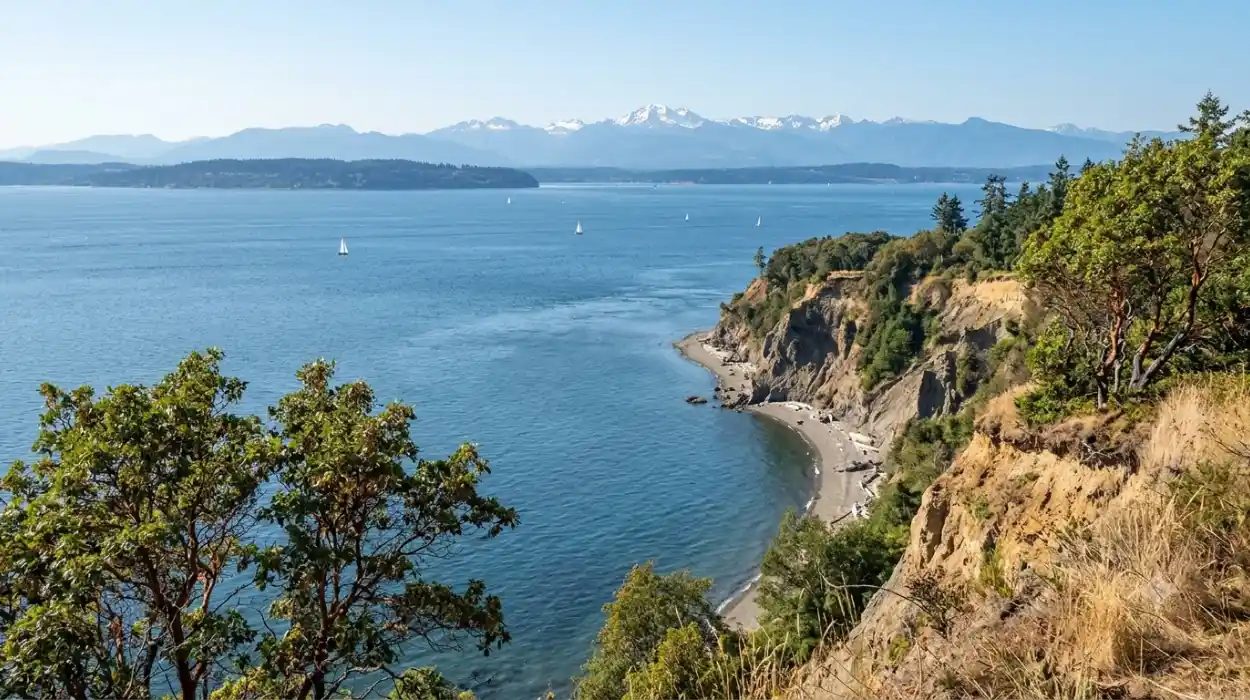
Branching off the primary Loop Trail, the South Bluff Trail and North Bluff Trail trace the edges of the high sea cliffs. These paths lead directly to steep staircases and timber-supported switchbacks descending to the tidal flats below. The South Beach Trail drops roughly 140 feet through a shaded ravined forest, opening onto the south shoreline facing Elliott Bay. The North Beach Trail winds down through dense cedar stands toward the northern beach spit facing Meadow Point and the Kitsap Peninsula.
How Do the Forest Paths Transition to the Coastal Tidal Beaches?
The habitat transition between the elevated interior forest and the shoreline beaches occurs through steep coastal ravines known historically as Hidden Valley and Wolf Tree Nature Trail. Walking west from the interior woodland canopy, the environmental conditions change within a distance of less than a half-mile.

[ Elevated Forest Canopy ]
  │ High shade, dense Douglas-fir, Western Redcedar
  ▼
[ Ravine & Wetland Transition ]
  │ High humidity, sword ferns, salmonberry, freshwater seepages
  ▼
[ Coastal Dune & Bluff Base ]
  │ Marine winds, high exposure, shore pine, beach grass
  ▼
[ Intertidal Saltwater Zone ]
  │ Eelgrass beds, gravel tidelands, barnacle-covered rocks
As hikers move down through these natural corridors, the dense Douglas-fir canopy gives way to moisture-loving plants such as Western Sword Fern (Polystichum munitum), Salmonberry (Rubus spectabilis), and Horsetail (Equisetum). Freshwater seeps trickle down the clay bluffs, creating micro-wetlands inside the shaded gulches.
Upon reaching the base of the bluff, the sheltered forest environment opens to intense marine winds, sunlight, and salt spray. The plant life transitions to drought-tolerant, salt-tolerant vegetation like Shore Pine (Pinus contorta), Dune Grass (Ammophila), and Pacific Madrone (Arbutus menziesii) anchored in sandy soil. Steps later, visitors walk directly onto the marine tideland, where the substrate converts from soft sandy soil to marine cobble, driftwood deposits, and low-tide eelgrass beds.
What Wildlife and Bird Species Can You Observe Across the Park?
Discovery Park is recognized as an Important Bird Area (IBA) by the National Audubon Society, serving as a vital sanctuary for over 270 cataloged bird species alongside native terrestrial and marine mammals.
| Wildlife Category | Resident & Migratory Species | Primary Viewing Locations |
| Raptors & Birds of Prey | Bald Eagles, Cooper’s Hawks, Peregrine Falcons, Red-tailed Hawks | Forest canopy edges, open central meadows, bluff snags |
| Marine & Shorebirds | Great Blue Herons, Belted Kingfishers, Harlequin Ducks, Cormorants, Brandt’s Gulls | West Point tide flats, North Beach, offshore waters |
| Marine Mammals | Harbor Seals, California Sea Lions, Southern Resident Killer Whales (Orcas), Harbor Porpoises | Waters off West Point Light, South Beach shoreline |
| Terrestrial Wildlife | Black-tailed Deer, Pacific Tree Frogs, Eastern Gray Squirrels, Coyotes | Hidden Valley ravine, interior forest groves, thickets |
The park’s location on the Pacific Flyway makes it a resting point for migratory songbirds during spring and autumn migrations. Offshore, harbor seals frequently haul out on the sand spit near the lighthouse to rest during low tide, while California sea lions can be spotted swimming through the currents of the Puget Sound shipping lanes.
What Is the Historic Significance of the West Point Light Structure?
Situated on the westernmost tip of Discovery Park, the West Point Light (also known as the Discovery Park Lighthouse) is a prominent historical and navigational landmark within the Pacific Northwest. Established in 1881, it was the first complete government-built lighthouse in the Puget Sound region to assist vessels navigating the waters between Elliott Bay and Possession Sound.
+-------------------------------------------------------------------+
|                     WEST POINT LIGHT STATION                      |
|                                                                   |
|  [ 27-Foot Brick Tower ]  ---> Active 4th-Order Fresnel Lens      |
|  [ Italianate Keepers  ]  ---> Dual Victorian Staff Residences    |
|  [ Fog Signal Building ]  ---> Historical Sound Warning Station   |
|                                                                   |
|  Status: Listed on National Register of Historic Places (1977)    |
+-------------------------------------------------------------------+
The light station features a 27-foot square brick tower integrated with an active navigational beacon that stands 23 feet above sea level. Initially operating with a fourth-order Fresnel lens, the structure now uses an automated modern optic maintained by the United States Coast Guard. Adjacent to the light tower stand two historic Victorian-style Italianate keeper’s quarters constructed in 1881.

Due to its historical architectural integrity and maritime importance, the West Point Light Station was officially listed on the National Register of Historic Places in 1977. The surrounding grounds provide uninterrupted views across the water directly toward the Olympic Mountains, making it one of the most photographed heritage structures in King County.
How Much Time Is Needed to Fully Explore Discovery Park?
Planning a visit to Discovery Park requires allocating time based on intended activities, trail choices, and mobility preferences. Because the park spans over 500 acres with variable terrain, visitor time investments generally fall into three distinct duration brackets:
[ Quick Express Visit ] ─────────► 1.5 to 2 Hours (Loop Trail only)
[ Standard Exploration ] ──────► 3.0 to 4 Hours (Loop + Beach + Lighthouse)
[ Full-Day Immersion ] ────────► 5.0 to 6 Hours (Complete trails + Cultural sites)
Express Visit (1.5 to 2 Hours)
A short visit allows visitors to complete the main 2.8-mile Loop Trail. This route provides a overview of the central forest canopy, passing through the historic Fort Lawton district and reaching the main bluff overlook before returning to either the North or East Parking Lot.
Standard Exploration (3 to 4 Hours)
The recommended time for first-time visitors is three to four hours. This window allows you to walk the main Loop Trail, descend the South or North Bluff staircase to the shoreline, explore the West Point Light station on the beach spit, and hike back up the bluff to the Discovery Park Environmental Learning Center.
Full-Day Immersion (5 to 6 Hours)
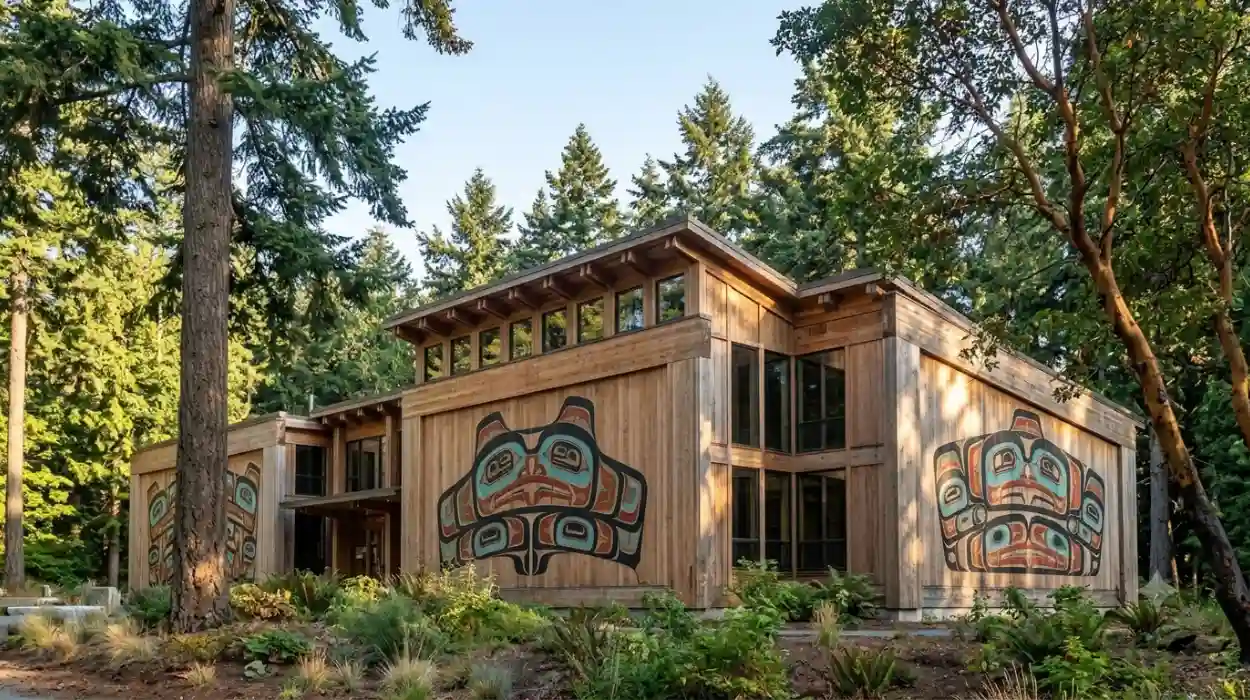
A comprehensive full-day visit covers all 11.8 miles of side trails, including the Hidden Valley Ravine, Wolf Tree Nature Trail, Daybreak Star Cultural Center, and extended beachcombing along both North and South beaches during low tide.
Nearby Travel Connections & Local Neighborhood Context
Discovery Park sits embedded within the quiet residential peninsula of Magnolia, situated just five miles northwest of Downtown Seattle. Traveling to and from the park offers direct connections to neighboring coastal districts such as Ballard (located immediately north across the Salmon Bay waterway and the Hiram M. Chittenden Locks) and Queen Anne (situated to the east).
Visiting a 534-acre natural park involves extensive walking, elevation changes, and outdoors exposure. Travelers often pair a morning or afternoon hiking excursion at Discovery Park with local dining nearby in the Magnolia Village center or surrounding coastal neighborhoods.
Pairing an active coastal outdoor hike with a visit to local neighborhood coffee roasters and eateries provides a balanced itinerary that satisfies both outdoor recreation and local culinary interests.
Frequently Asked Questions About Discovery Park Seattle
How do you access the beach and lighthouse at Discovery Park?
Visitors can reach the beach and West Point Light by hiking down the North or South Beach Trails (approx. 1.2 miles one-way with 140 feet of elevation change). Free beach parking permits are restricted at the visitor center solely for families with children under eight, seniors over 62, or individuals with physical mobility limitations.
Is parking free at Discovery Park in Seattle?
Yes, Discovery Park offers free public parking across three primary lots: the East Parking Lot, North Parking Lot, and South Parking Lot. Parking spaces can fill up quickly on summer weekends. Visitors should arrive early in the morning or use King County Metro Bus Route 33 for direct public transit access.
Are dogs allowed on the trails and beaches at Discovery Park?
Dogs are permitted on the inland walking trails throughout Discovery Park, provided they remain on a physical leash no longer than six feet at all times. However, dogs are strictly prohibited on all beaches and tidelands to protect sensitive marine habitats, resting seals, and shorebird nesting zones.
What are the opening hours for Discovery Park and the Visitor Center?
The grounds of Discovery Park are open daily from 4:00 AM to 11:30 PM. The Discovery Park Environmental Learning Center (visitor center), which features educational exhibits, park maps, restrooms, and staff assistance, generally operates Tuesday through Sunday from 8:30 AM to 5:00 PM (closed on major city holidays).
Can you see Mount Rainier and the Olympic Mountains from Discovery Park?
Yes, on clear days, the western sea bluffs and South Beach offer panoramic views of the Olympic Mountain Range across the Puget Sound. Looking south and southeast from select bluff locations and tide flats, visitors can also catch views of Mount Rainier rising above the Puget Sound basin.