
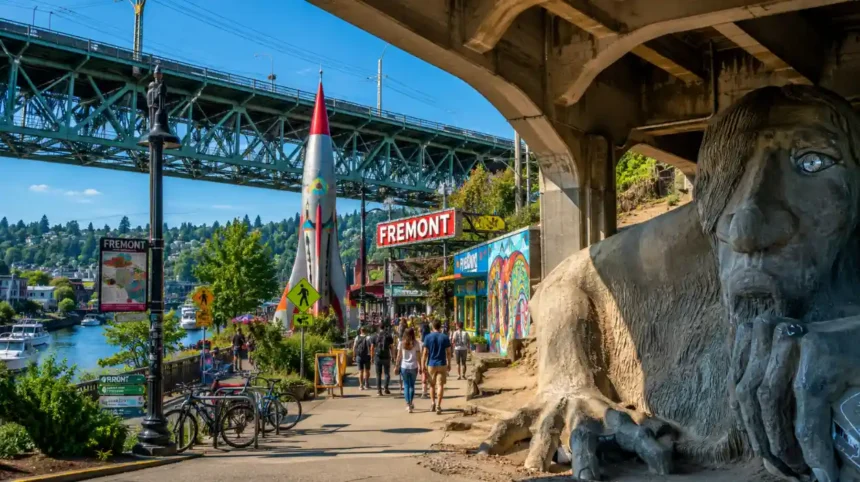
Fremont is one of the most distinctive urban neighborhoods in Seattle, located north of Downtown Seattle in King County. Known for its public art installations, unconventional landmarks, creative culture, and walkable streets, Fremont offers a sightseeing experience unlike any other neighborhood in the Pacific Northwest. Visitors come to explore iconic sculptures, waterfront views, quirky attractions, and community-driven artistic spaces that have helped establish Fremont’s reputation as the self-proclaimed “Center of the Universe.”
Unlike traditional tourist districts focused on museums or shopping, Fremont combines public art, neighborhood identity, and outdoor exploration into a compact area that can easily be experienced on foot. The neighborhood sits along the Lake Washington Ship Canal and connects visitors to several notable Seattle landmarks while maintaining a distinct local character.
What Makes Fremont’s Neighborhood Identity Different From Other Seattle Districts?
Fremont stands apart because it embraces creativity, humor, and unconventional urban design. The neighborhood evolved from an independent working-class community into one of Seattle’s most recognized cultural districts. Today, artistic expression is visible throughout the area in sculptures, murals, and community spaces.
The district’s nickname, “The Center of the Universe,” reflects its playful civic identity. Visitors immediately notice that Fremont celebrates individuality rather than conformity. Public art is integrated into everyday streetscapes, making the entire neighborhood feel like an open-air gallery.
The Fremont Bridge serves as a major gateway into the area and connects visitors to surrounding neighborhoods including Queen Anne, Wallingford, and Ballard. The bridge itself has become part of the neighborhood’s visual identity, offering excellent views of the Lake Washington Ship Canal and passing maritime traffic.
This unique blend of urban culture, artistic freedom, and pedestrian accessibility has made Fremont one of Seattle’s most photographed neighborhoods.
Why Is the Fremont Troll the Neighborhood’s Most Famous Landmark?
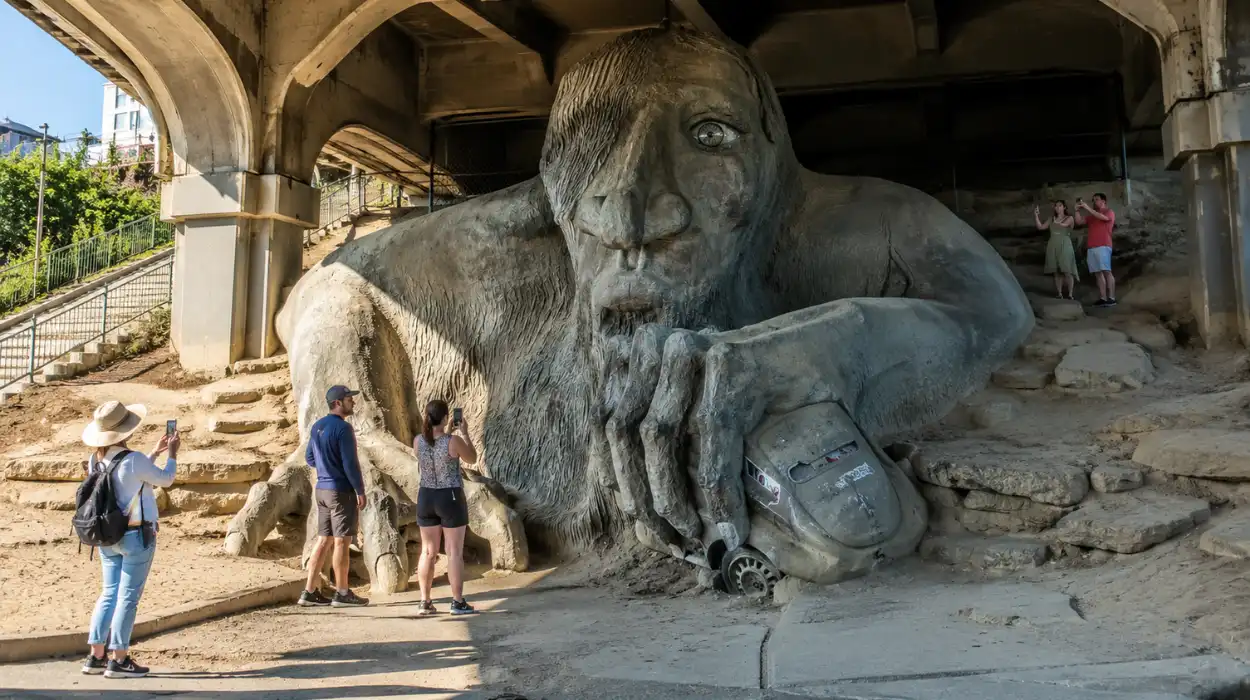
The Fremont Troll is the neighborhood’s most recognized attraction and one of Seattle’s most photographed public artworks. Located beneath the Aurora Bridge, this massive concrete sculpture was created in 1990 by a team of local artists and has since become an internationally recognized symbol of Fremont.
The sculpture depicts a giant troll emerging from beneath the bridge while gripping an actual Volkswagen Beetle. Inspired by Scandinavian folklore and the neighborhood’s creative spirit, the artwork transformed an underutilized urban space into a major tourist destination.

Visitors often stop to photograph the sculpture from multiple angles because of its impressive scale and unusual design. The location beneath the George Washington Memorial Bridge creates a dramatic setting that enhances the visual impact of the artwork.
The Fremont Troll represents more than public art. It symbolizes the neighborhood’s commitment to creativity, community revitalization, and unconventional thinking. For many travelers, visiting the troll serves as the starting point for a broader exploration of Fremont’s artistic landscape.
How Can Visitors Explore Fremont’s Public Art Installations on Foot?
One of the best ways to experience Fremont is through a self-guided walking route that connects the neighborhood’s most significant public artworks. The compact layout allows visitors to discover multiple landmarks within a short distance.
The Fremont Rocket stands prominently near North 35th Street. Originally constructed as a Cold War-era military rocket, it was repurposed into a public art installation and has become one of the neighborhood’s defining visual features. Its bright colors and unusual placement reflect Fremont’s commitment to creative expression.
Nearby, visitors can find the statue of Vladimir Lenin, one of the most unusual monuments in the United States. While controversial and often discussed, the statue has become a notable landmark that sparks conversation about history, politics, and public art. Its presence contributes to Fremont’s reputation for displaying unconventional attractions.
Street murals, artistic utility boxes, sculptural installations, and community-created artwork can be found throughout the neighborhood. Walking between these sites provides insight into how public spaces in Fremont are used as platforms for creativity and civic engagement.
The pedestrian-friendly streets encourage visitors to slow down, observe details, and engage with the neighborhood beyond traditional sightseeing.
What Can Travelers Experience Along the Fremont Canal and Waterfront Areas?
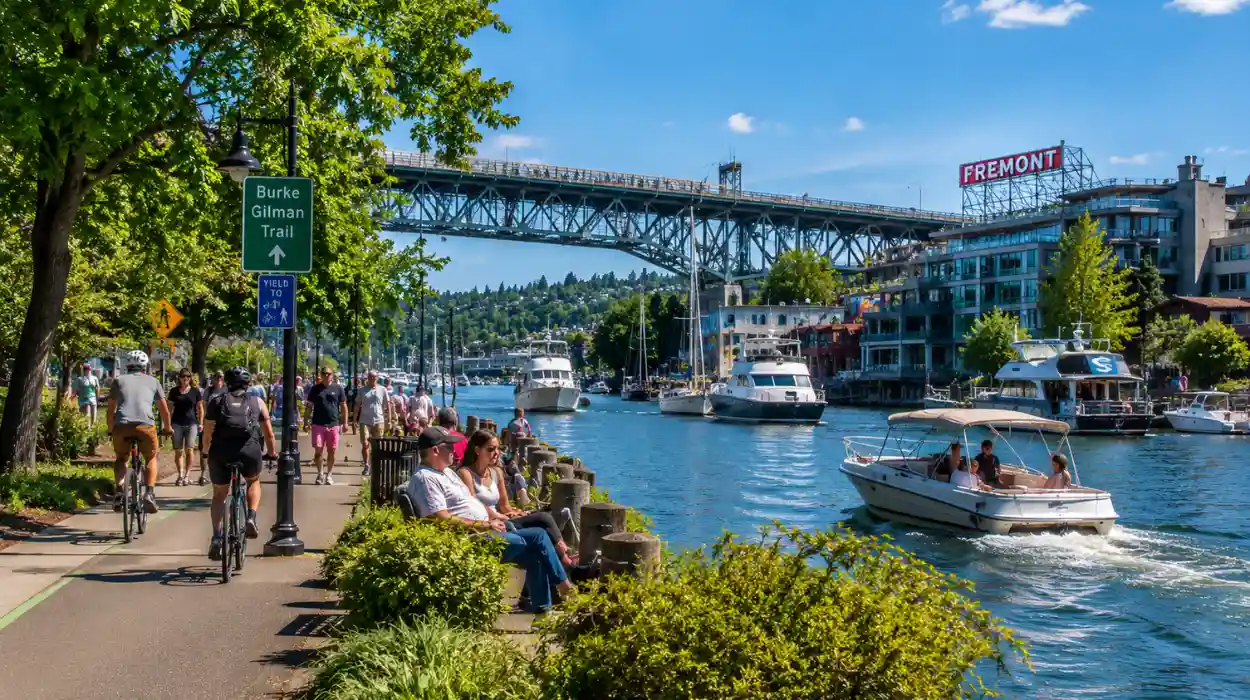
The Lake Washington Ship Canal forms an important part of Fremont’s landscape and contributes significantly to the visitor experience. The canal connects Lake Washington to Puget Sound and serves as a major maritime corridor for both commercial and recreational vessels.
Walking paths along the waterfront provide scenic viewpoints where visitors can observe boats traveling through the canal. The combination of urban infrastructure, water views, and public spaces creates a distinctive atmosphere rarely found in other Seattle neighborhoods.
The Fremont Canal Park area offers opportunities to enjoy open-air recreation while observing maritime activity. Visitors often spend time watching sailboats, fishing vessels, kayaks, and pleasure craft navigate the waterway.
The nearby Burke-Gilman Trail further enhances Fremont’s appeal for outdoor enthusiasts. This popular regional trail connects multiple Seattle neighborhoods and allows visitors to extend their exploration beyond Fremont. Cyclists, runners, and walkers frequently use the trail, contributing to the area’s active community atmosphere.
The waterfront environment also highlights Fremont’s historical connection to industry, transportation, and commerce while showcasing its modern role as a recreational destination.
How Does Fremont’s Creative Culture Shape the Visitor Experience?
Fremont’s cultural identity extends beyond its famous landmarks. The neighborhood has long been associated with artists, entrepreneurs, designers, and innovators who have contributed to its distinctive atmosphere.
Community events, seasonal festivals, and public gatherings reinforce Fremont’s reputation as one of Seattle’s most creative districts. Public spaces are designed to encourage interaction, exploration, and participation rather than passive observation.
Visitors often notice that art is not confined to galleries or museums. Instead, creativity appears throughout streets, parks, and commercial corridors. This integration of artistic expression into daily life helps create an immersive visitor experience.
Architectural diversity also contributes to Fremont’s character. Historic buildings exist alongside modern developments, creating visual contrast that reflects the neighborhood’s evolution over time.
The combination of cultural expression, public engagement, and neighborhood pride distinguishes Fremont from many urban tourism destinations and supports its growing popularity among travelers seeking authentic local experiences.
What Is the Best Walking Route for Seeing Fremont’s Most Unique Attractions?
A practical exploration route begins at the Fremont Troll beneath the Aurora Bridge. From there, visitors can walk toward North 36th Street and continue into the neighborhood’s central commercial district.
The route naturally connects the Fremont Rocket, the Lenin Statue, public murals, and canal viewpoints. Continuing toward the waterfront provides opportunities to experience the Lake Washington Ship Canal and sections of the Burke-Gilman Trail.
This route allows travelers to experience Fremont’s major attractions while understanding how public art, transportation infrastructure, and community identity intersect throughout the neighborhood.
Most visitors can comfortably complete the core walking route within two to three hours. However, photographers, architecture enthusiasts, and urban explorers often spend significantly longer examining details and discovering lesser-known artistic elements.
The walkable nature of Fremont remains one of its strongest advantages, making it accessible for both first-time Seattle visitors and returning travelers seeking a deeper neighborhood experience.
Where Can Visitors Continue Exploring After Touring Fremont’s Attractions?
Fremont’s central location makes it easy to connect with other nearby Seattle destinations. Ballard, Wallingford, Queen Anne, and Downtown Seattle can all be reached within a short distance.
If you are visiting this area, you may also want to explore Fremont coffee shops and brunch spots.
This complementary guide helps visitors satisfy dining-related search intent by identifying places to relax before or after a walking tour. Pairing neighborhood exploration with local cafés and brunch venues creates a more complete Fremont experience while supporting a broader understanding of the district’s community culture.
This internal connection strengthens the overall visitor journey by combining sightseeing and local dining discovery within the same geographic area.
Frequently Asked Questions About Fremont Attractions
What is Fremont most famous for in Seattle?
Fremont is best known for the Fremont Troll, public art installations, the Fremont Rocket, the Lenin Statue, and its reputation as Seattle’s most creative and unconventional neighborhood.
How long does it take to explore Fremont’s main attractions?
Most visitors can see Fremont’s major landmarks in two to three hours. Travelers interested in photography, public art, and waterfront exploration may spend half a day or longer.
Is Fremont walkable for tourists?
Yes. Fremont is one of Seattle’s most walkable neighborhoods. Major attractions, public artworks, canal viewpoints, and community spaces are located within a compact area connected by pedestrian-friendly streets.
Why is Fremont called the Center of the Universe?
The nickname reflects Fremont’s playful community identity and sense of independence. Residents adopted the title as part of the neighborhood’s humorous and creative culture.
What is the best time to visit Fremont?
Late spring through early fall generally offers the most comfortable weather for walking tours. Clear conditions also improve views of public art installations and waterfront scenery.
Is the Fremont Troll free to visit?
Yes. The Fremont Troll is a public artwork located beneath the Aurora Bridge and can be visited free of charge throughout the year.