
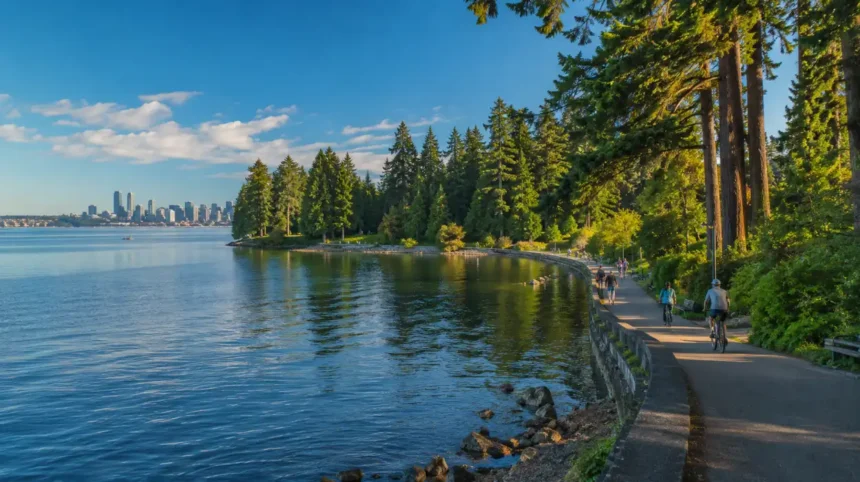
Seward Park is one of the best places in Seattle, Washington, for travelers seeking forest trails, Lake Washington shoreline views, wildlife observation, and year-round outdoor recreation. Located in King County, this 300-acre peninsula park combines old-growth forest, scenic waterfront, family-friendly amenities, and peaceful walking and cycling routes, making it a top destination for both locals and visitors exploring the city’s natural landscapes.
Unlike many urban parks, Seward Park offers a rare combination of protected forest habitat and expansive lakeside scenery within minutes of downtown Seattle. Whether you are planning a relaxing nature walk, birdwatching excursion, family picnic, or a cycling trip around Lake Washington, this guide covers everything you need to know before visiting.
Why Is Seward Park One of the Best Peninsula Parks to Visit in Seattle?
Seward Park stands on a forested peninsula extending into Lake Washington, creating a unique landscape that differs from most city parks in the Pacific Northwest. The peninsula provides panoramic water views, protected natural ecosystems, and recreational opportunities that appeal to visitors throughout every season.
One of the park’s defining characteristics is its extensive old-growth forest. Massive Douglas firs, western red cedars, bigleaf maples, and native understory plants have remained protected for generations, creating an immersive woodland environment rarely found inside a major metropolitan area.
The surrounding waters of Lake Washington also contribute to the park’s appeal. Visitors enjoy uninterrupted shoreline scenery with views toward Mercer Island, the Cascade Mountains on clear days, and neighborhoods surrounding southeast Seattle.

Because of its combination of accessibility and ecological preservation, Seward Park attracts hikers, walkers, runners, photographers, families, cyclists, wildlife enthusiasts, and educational groups throughout the year.
What Can You See While Exploring the Forest Loop Trail at Seward Park?
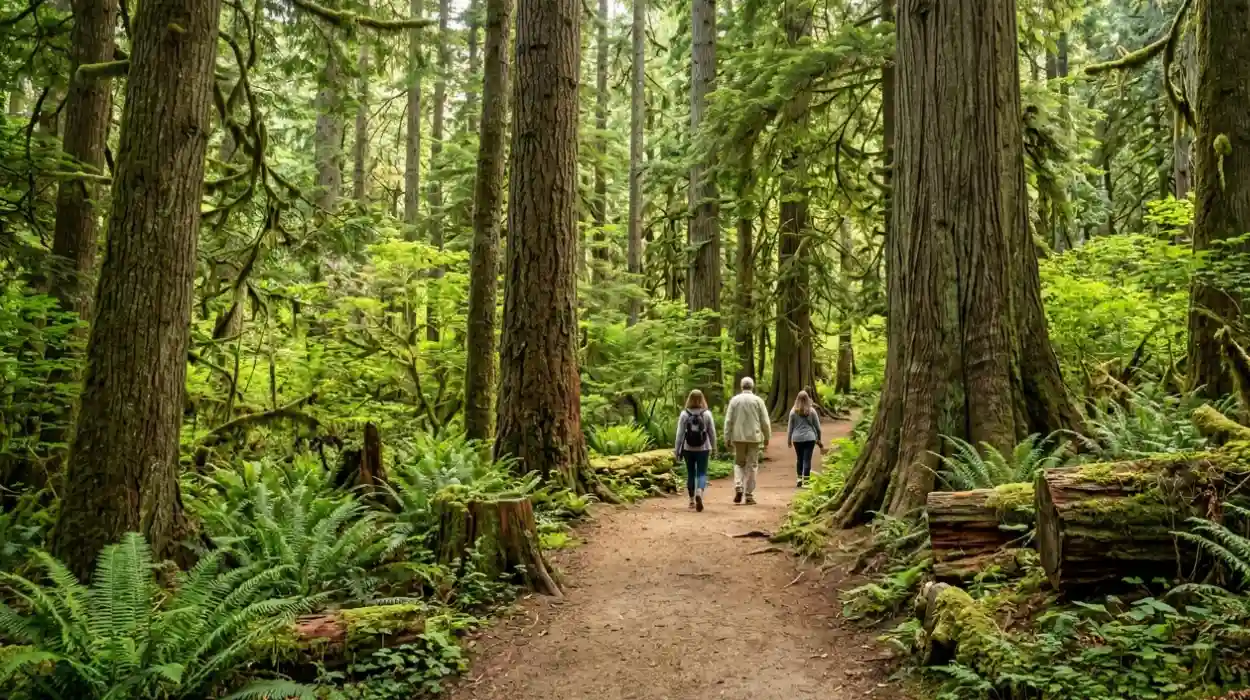
The Forest Loop Trail is one of Seward Park’s most popular attractions because it offers visitors an easy way to experience one of Seattle’s largest remaining old-growth forests.
The trail winds beneath towering evergreen trees that create a cool canopy even during warmer summer months. Moss-covered trunks, fallen logs, ferns, and native shrubs showcase the biodiversity typical of western Washington forests.

Interpretive signs throughout portions of the trail explain the area’s ecology, native plant communities, and conservation efforts, making the walk educational as well as scenic.
The relatively gentle terrain allows visitors of varying fitness levels to complete the loop comfortably. Families with children, older adults, photographers, and casual hikers often choose this trail because it balances accessibility with immersive natural surroundings.
Throughout the walk, visitors frequently encounter squirrels, songbirds, woodpeckers, and seasonal wildflowers, while the quiet atmosphere provides an escape from Seattle’s urban environment.
How Beautiful Are the Lake Washington Shoreline Views Around Seward Park?
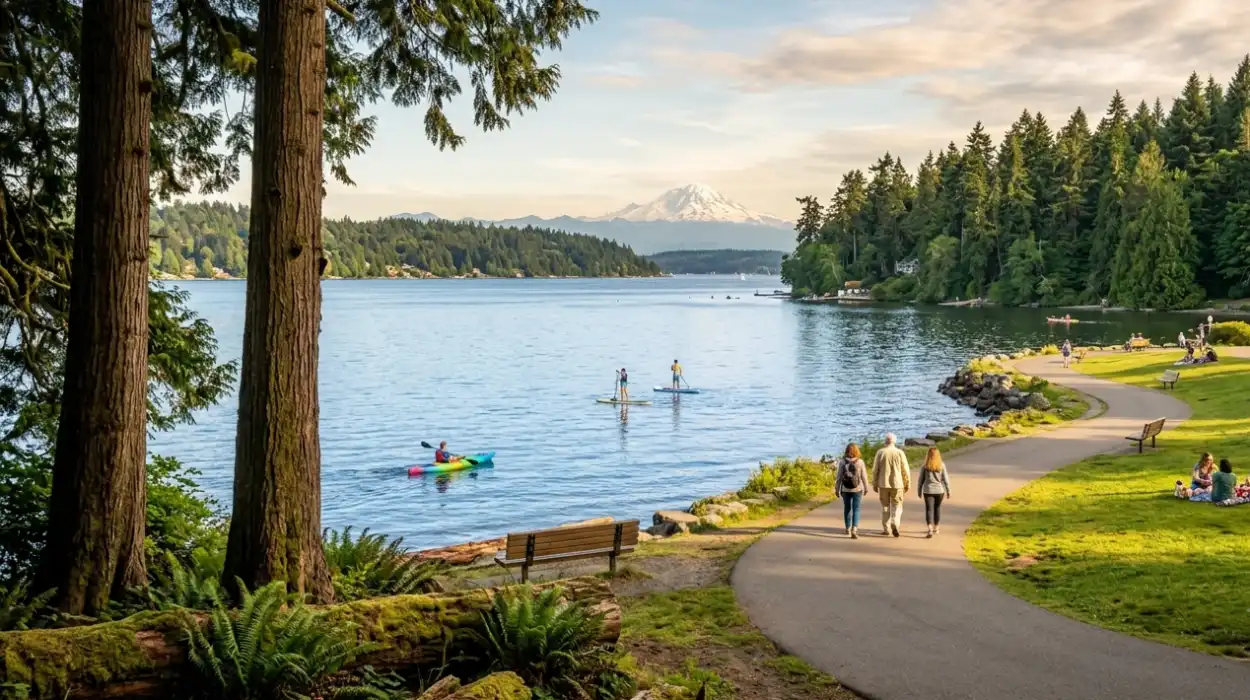
Lake Washington is one of the defining natural features of the Seattle region, and Seward Park offers some of its most accessible shoreline viewpoints.
A paved path circles much of the peninsula, allowing visitors to enjoy continuous lake views without needing advanced hiking experience. Along the waterfront, benches and open grassy areas provide excellent places to relax while watching sailboats, kayakers, paddleboarders, and rowing teams crossing the water.
During sunrise, soft light reflects across Lake Washington toward Seattle’s eastern shoreline, creating ideal photography conditions. Sunset also produces beautiful colors over the lake as evening light filters through the surrounding trees.

On exceptionally clear days, visitors may spot distant mountain views beyond the lake, adding another scenic dimension to the experience.
The shoreline also changes throughout the seasons. Spring brings blooming vegetation, summer offers vibrant blue water and active recreation, autumn fills the park with colorful foliage, and winter provides peaceful landscapes with fewer crowds.
What Wildlife Can Visitors Observe at Seward Park Throughout the Year?
Seward Park serves as an important urban wildlife habitat because its protected forests and shoreline ecosystems support numerous native species.
Birdwatching remains one of the park’s biggest attractions. Depending on the season, visitors may observe bald eagles soaring above Lake Washington, great blue herons near the shoreline, woodpeckers within the forest, hummingbirds, chickadees, nuthatches, and various migratory songbirds.
Waterfowl are commonly seen near the peninsula, including ducks, geese, and seasonal migratory species using Lake Washington as part of their migration routes.
Small mammals such as eastern gray squirrels, raccoons, and rabbits are frequently spotted along quieter forest sections, while amphibians and insects contribute to the area’s healthy ecosystem.
Nature photographers especially appreciate the diversity of wildlife because animals often remain active throughout different times of the day.
Visitors should remember that Seward Park protects sensitive habitats. Observing wildlife from a respectful distance helps preserve the area’s ecological balance while allowing everyone to enjoy natural encounters safely.
Is Walking or Cycling Better for Exploring Seward Park?
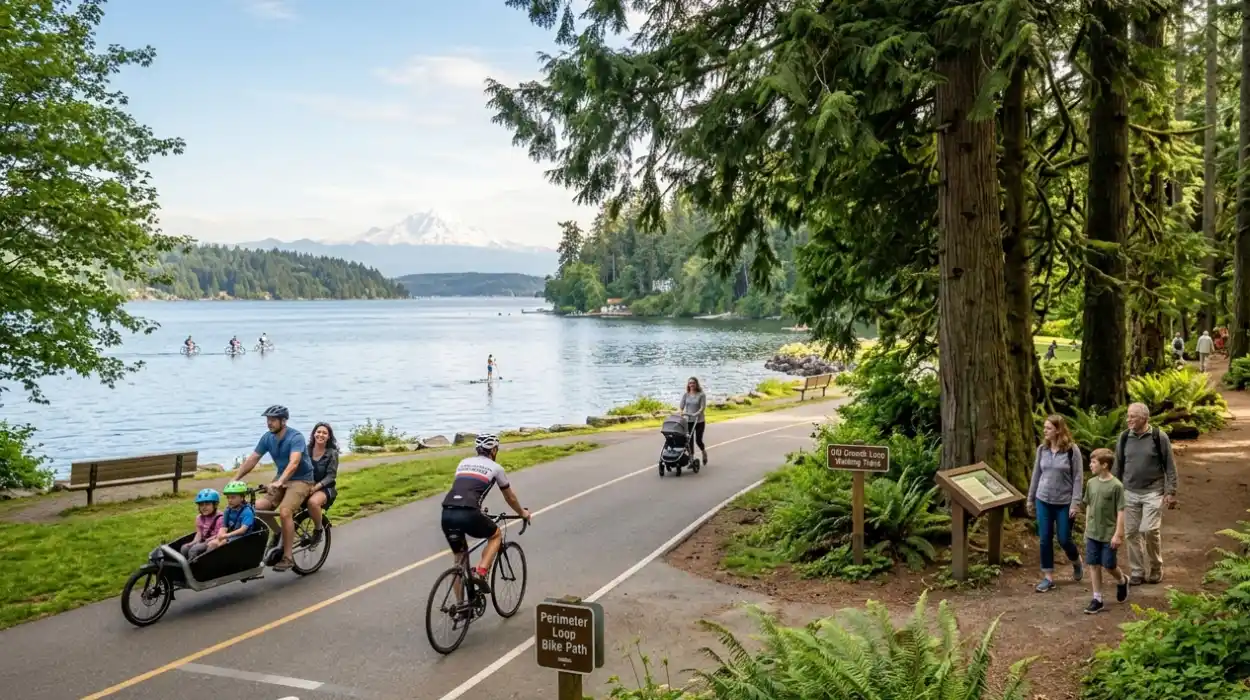
Both walking and cycling provide excellent ways to experience Seward Park, but each offers a different perspective depending on visitor preferences.
Walking allows travelers to fully appreciate the park’s natural details. Forest sounds, bird activity, interpretive signs, lakeside viewpoints, and quiet rest areas are easier to enjoy at a slower pace. Walkers also have greater flexibility to explore side trails and observation points.
Cycling is ideal for visitors seeking longer recreational rides. The paved perimeter road around the peninsula connects smoothly with broader cycling routes throughout southeast Seattle and portions of the Lake Washington Loop, making Seward Park an excellent stop for regional cyclists.
Families often combine both experiences by cycling the paved roads before enjoying a leisurely walk through the old-growth forest.
The park’s well-maintained infrastructure accommodates a wide variety of users while encouraging safe shared use among pedestrians, runners, cyclists, and families with strollers.
Why Is Seward Park a Great Destination for Families and Outdoor Recreation?
Seward Park offers diverse recreational opportunities that make it one of Seattle’s most family-friendly outdoor destinations.
Large picnic lawns provide plenty of space for gatherings, while playgrounds allow younger visitors to remain active throughout the day. Open grassy areas support casual games, relaxation, and community events without disturbing protected forest habitats.
The shoreline creates opportunities for kayaking, canoeing, paddleboarding, and seasonal water recreation on Lake Washington. Families often spend several hours alternating between lakeside activities and forest walks.
Educational programs occasionally hosted by local organizations introduce children to native wildlife, forest ecology, and environmental stewardship, making the park valuable for both recreation and learning.
Public restrooms, parking areas, accessible pathways, and clear directional signage further improve the visitor experience for travelers of all ages.
Because the park accommodates different activity levels, multigenerational families frequently choose Seward Park for day trips where everyone can participate comfortably.
When Is the Best Time to Visit Seward Park for Seasonal Beauty?
Every season reveals a different side of Seward Park, allowing repeat visitors to enjoy changing scenery throughout the year.
Spring transforms the forest with fresh green foliage, blooming native plants, and increased bird activity as migratory species return to the Seattle area. Mild temperatures also make hiking particularly comfortable.
Summer is the busiest season because warm weather encourages walking, cycling, kayaking, paddleboarding, and family picnics along Lake Washington. Longer daylight hours maximize sightseeing opportunities.
Autumn attracts photographers with colorful maple leaves contrasting against evergreen forests. Cooler temperatures also create pleasant conditions for extended walks around the peninsula.
Winter offers a quieter experience. Misty mornings, evergreen landscapes, and peaceful shoreline views appeal to travelers seeking solitude while still enjoying Seattle’s natural beauty.
Regardless of the season, wearing weather-appropriate clothing is recommended since Pacific Northwest conditions can change quickly.
How Does Seward Park Connect to Other Seattle Travel Experiences?
Seward Park fits naturally into a broader Seattle sightseeing itinerary because of its location within southeast Seattle and convenient access to surrounding neighborhoods.
Many visitors combine the park with nearby outdoor destinations around Lake Washington to experience more of Seattle’s waterfront environment. The park also complements city attractions by offering a quieter natural setting after exploring busy downtown districts.
If you are visiting this area, you may also want to explore the best coffee shops near Seward Park.
Pairing a relaxing forest walk or lakeside cycling trip with nearby cafés creates a balanced travel experience for visitors looking to enjoy local coffee culture after spending time outdoors. This combination satisfies travelers searching for convenient places to relax, recharge, and experience neighborhood hospitality without extending their itinerary significantly.
Frequently Asked Questions About Visiting Seward Park
Is Seward Park free to visit?
Yes. Seward Park is free and open to the public. Visitors can access walking trails, shoreline paths, picnic areas, playgrounds, and scenic viewpoints without paying an admission fee, although parking regulations may vary depending on local guidelines.
How long does it take to explore Seward Park?
Most visitors spend between two and four hours exploring Seward Park. Walking the perimeter trail, visiting the Forest Loop Trail, relaxing along Lake Washington, and enjoying recreational areas can easily fill a half-day itinerary.
Is Seward Park suitable for children?
Yes. Seward Park is highly family-friendly thanks to its playgrounds, paved walking paths, picnic areas, open lawns, accessible facilities, and gentle trails suitable for children of different ages.
Can you cycle around Seward Park?
Yes. Cyclists can ride the paved roads and perimeter routes surrounding the peninsula. Many riders also include Seward Park as part of longer cycling routes around Lake Washington and southeast Seattle.
What wildlife is commonly seen at Seward Park?
Visitors frequently observe bald eagles, great blue herons, ducks, geese, woodpeckers, hummingbirds, squirrels, rabbits, and numerous migratory bird species throughout different seasons.
What is the best season to visit Seward Park?
Seward Park offers unique experiences year-round. Spring and autumn provide excellent scenery and comfortable temperatures, while summer is ideal for outdoor recreation and winter offers peaceful forest walks with fewer crowds.
Seward Park stands among Seattle’s premier urban nature destinations by combining protected old-growth forest, scenic Lake Washington shoreline, diverse wildlife, accessible recreational facilities, and year-round natural beauty within King County. Whether your goal is hiking the Forest Loop Trail, enjoying panoramic waterfront views, observing native birds, cycling around the peninsula, or spending quality time with family, the park consistently delivers an outstanding outdoor experience. Its combination of ecological significance and recreational accessibility makes Seward Park an essential stop for anyone exploring Seattle’s natural attractions.